Family Quiz Night
A quiz night for the whole family, from the youngest reader to the grandparents. Keeping it simple, questions only your family can answer, polls that start the laughter and mixed-age teams.
 By the Giga Quizzes team4 min read
In this post
A family quiz night is a different animal from a pub quiz. The players range from a seven-year-old to a grandparent, nobody wants to sit a test, and the best moments are the ones where everybody laughs at the same answer. The secret is to keep it simple and to make it about the family itself. Here is how to put together an evening every generation enjoys, and the questions that turn into stories.
Keep it simple
With mixed ages, the quiz should be easy to follow and quick to play. Match the question types to the youngest players, and let the content stretch the oldest.
| Players | Question types that work | Time per question |
|---|---|---|
| Not yet reading | Picture answers, with the question read aloud | 30 seconds, on a grown-up’s phone |
| Early readers | True or false, single choice with short answers | 25–30 seconds |
| Older children and adults | Everything, including ordering and typed answers | 20–30 seconds |
Ten to fifteen questions per round is plenty, and two short rounds with snacks in between beat one long one. Read every question aloud as it appears, for the youngest players and for anyone sitting far from the screen.
Questions only your family can answer
The questions everyone remembers are the ones about the family. Nobody else in the world could answer them, and every reveal turns into a story the youngest have never heard.
Family questions to adapt
- Where did Grandma and Grandpa go on their first holiday together?
- What was Dad’s first job?
- Which of these was Mum’s nickname at school?
- Whose baby photo is this? (A photo that uncovers itself slowly.)
- Which country has this family visited the most?
- What did your uncle get stuck in when he was six?
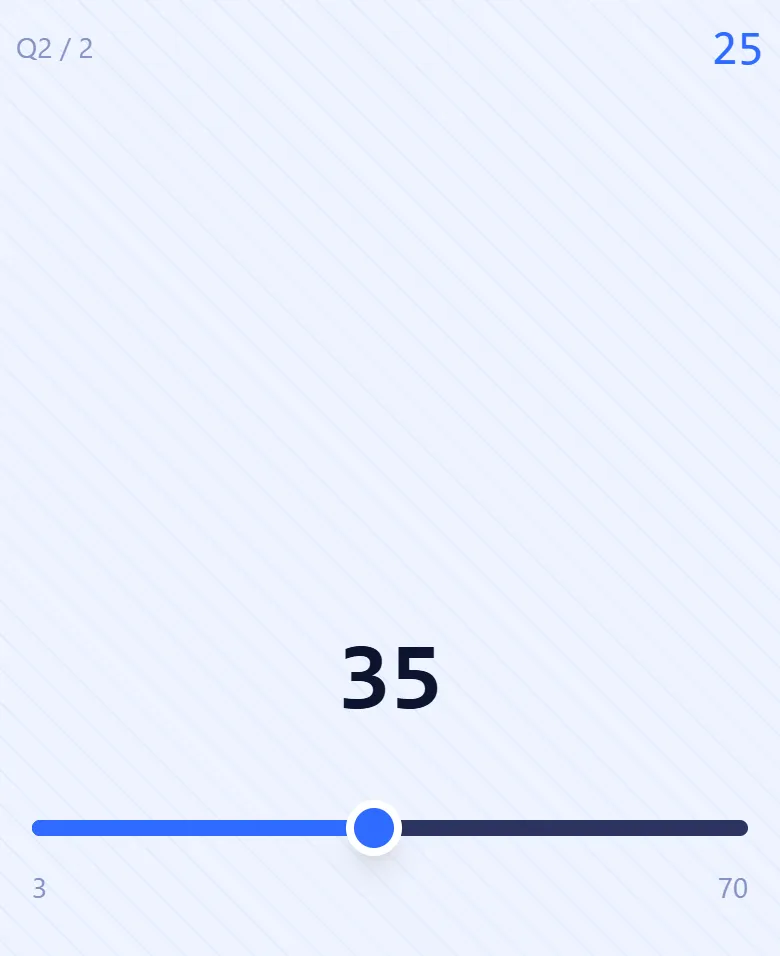
Numbers make the best guessing games. A slider lets everyone guess a number, and with close answers scoring, a near guess still earns points. “How old was Grandma when she learned to ride a bike?” is a perfect one if the answer is a surprise.
Collecting the facts
The research is half the fun. A week before, quietly ask each grown-up for three facts nobody else knows about them, and dig out a few old photos. Write the wrong answers so they are believable: if Dad’s first job was in a fish shop, offer a bakery, a petrol station and a cinema alongside it.
Check anything personal with the person it is about before it goes on the screen. A story that is hilarious to everyone else can be less hilarious to the one it is about.
Polls for the biggest laughs
A poll has no right answer and no points: everyone picks an answer and the screen shows how many chose each. In a family, polls are where the loudest laughs come from, because the answers are family members.
- Who takes longest in the bathroom?
- Who is most likely to forget their own birthday?
- Who is the best cook in the family?
- Who would survive longest on a desert island?
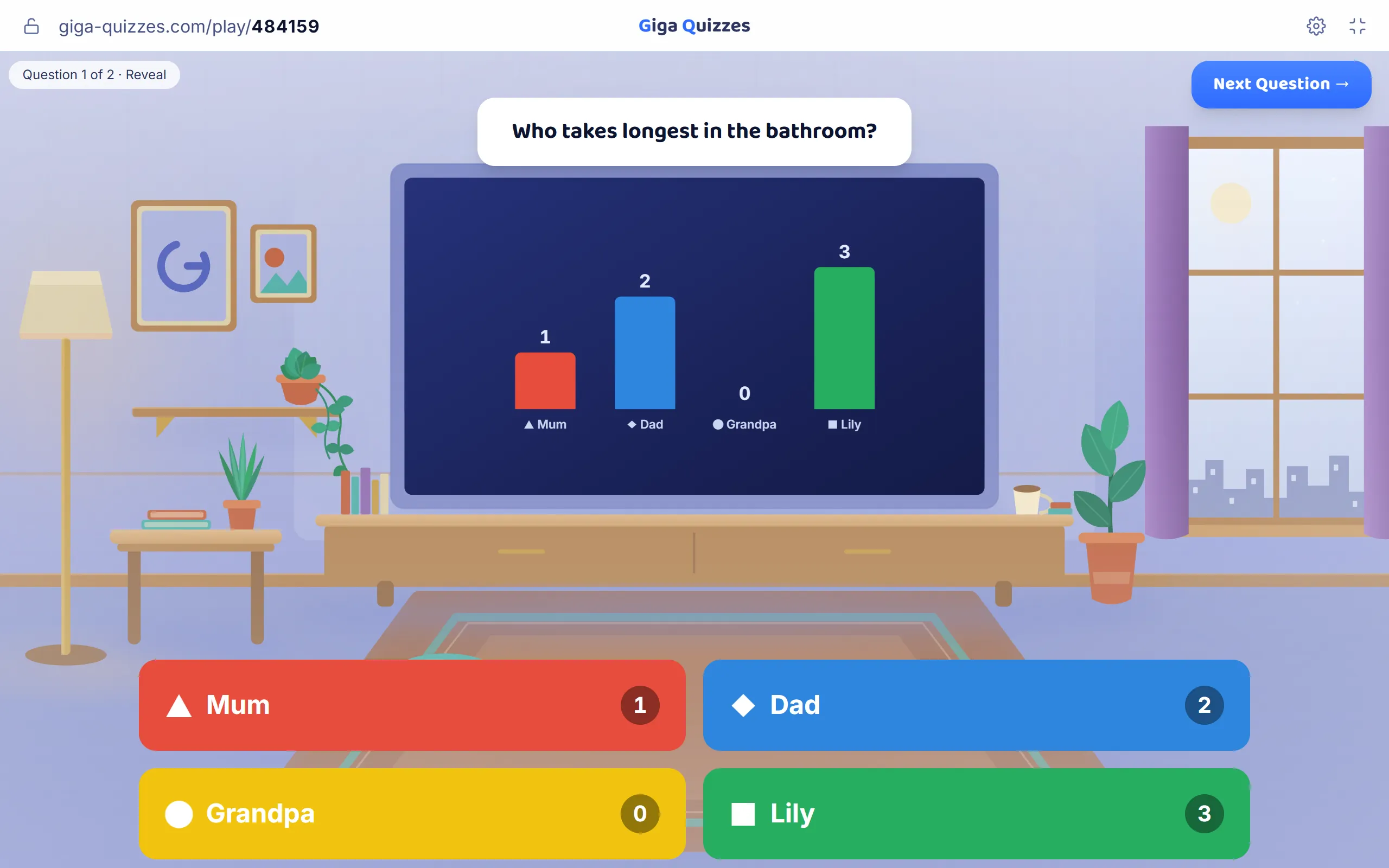
Nobody sees who voted for whom, which is exactly why everyone votes honestly, and why the accused always demands a recount.
Mixed-age teams
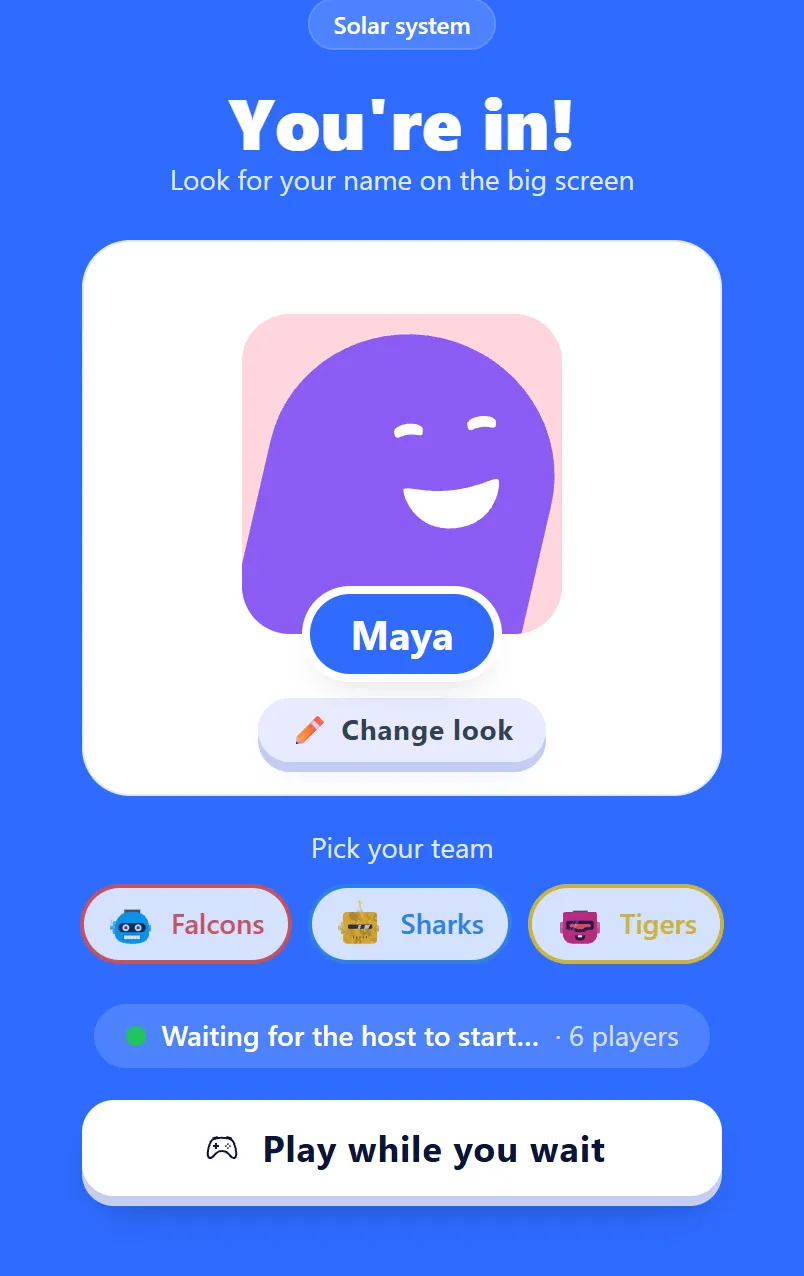
Teams solve the age problem. A team with a grandparent, a parent and a child has knowledge no single player has, and the children feel part of every right answer. Share the ages out across the teams and give each one a family nickname. Each player answers on their own phone and adds to the team’s total; a child too young for a phone can share one with a grown-up on the same team.
A running order for the evening
| Time | What happens |
|---|---|
| 7:00 | Everyone joins and picks a team; the youngest choose the team names |
| 7:10 | Round 1: easy general knowledge, with picture answers for the little ones |
| 7:25 | Snack break, and two silly polls while people eat |
| 7:35 | Round 2: the family round, full of stories and old photos |
| 7:50 | The podium, the prizes, and the arguments about the answers |
Put the family round second. By then everyone knows how the game works, and the stories it brings out make a far better ending than a round of capital cities.
The setup
Connect a laptop to the TV and host the quiz from there. Everyone else joins on their phones at giga-quizzes.com/play with the code on the TV, or by scanning the QR code, with no app and no accounts, so even the grandparents are in within a minute. Whoever made the quiz can still play: with Host can also answer switched on, the host answers by clicking on the TV and appears on the leaderboard with everyone else.
For a night with no preparation at all, Discover has free, ready-made quizzes, such as an easy world flag quiz that works well for mixed ages. After the last question, the podium rises: third place, then second, then the winners. A small prize for the winning team, and a silly one for last place, rounds off the night.
Try it in Giga Quizzes
Free, in the browser, and nothing for your students to install. These guides show each step on the real screens.
New to Giga Quizzes?
Free live quizzes in the browser. Students join from any phone, with no app.
Make your first quiz →