Host a Pub Quiz at Home
All a proper pub quiz at home needs is a big TV and everyone’s phones. A running order for five rounds, sample questions with answers, team tips and how to keep the arguments fun.
 By the Giga Quizzes team4 min read
In this post
A good pub quiz has a rhythm everyone knows: teams huddled round a table, a quizmaster drawing out the suspense, a furious argument about the capital of Australia. You can have all of it in your living room, without answer sheets, pencils or someone adding up scores at the end. The TV becomes the quizmaster’s screen and everyone plays on the phone already in their pocket. Here is a running order, a set of questions to start from, and the small things that make the night.
What you need
The kit list
- A big screen everyone can see from their seat: a TV with a laptop plugged in by HDMI, or a laptop casting to it.
- A phone per player. Nobody needs to install anything or sign up.
- A quizmaster, who builds the quiz and reads the questions out. You can still play; see below.
- Snacks within reach of every team, and a prize, however silly. It matters that there is one.
Players join by going to giga-quizzes.com/play and typing the code shown on the TV, or by pointing their phone camera at the QR code. Each name pops up on screen as it arrives, which is usually the first laugh of the night.
A running order for five rounds
Five rounds of five or six questions fill a relaxed evening with time to argue between them. Vary the format from round to round; the variety is half the fun.
| Round | Theme | Format | Time |
|---|---|---|---|
| 1 | General knowledge | Multiple choice, quick timers | 10 min |
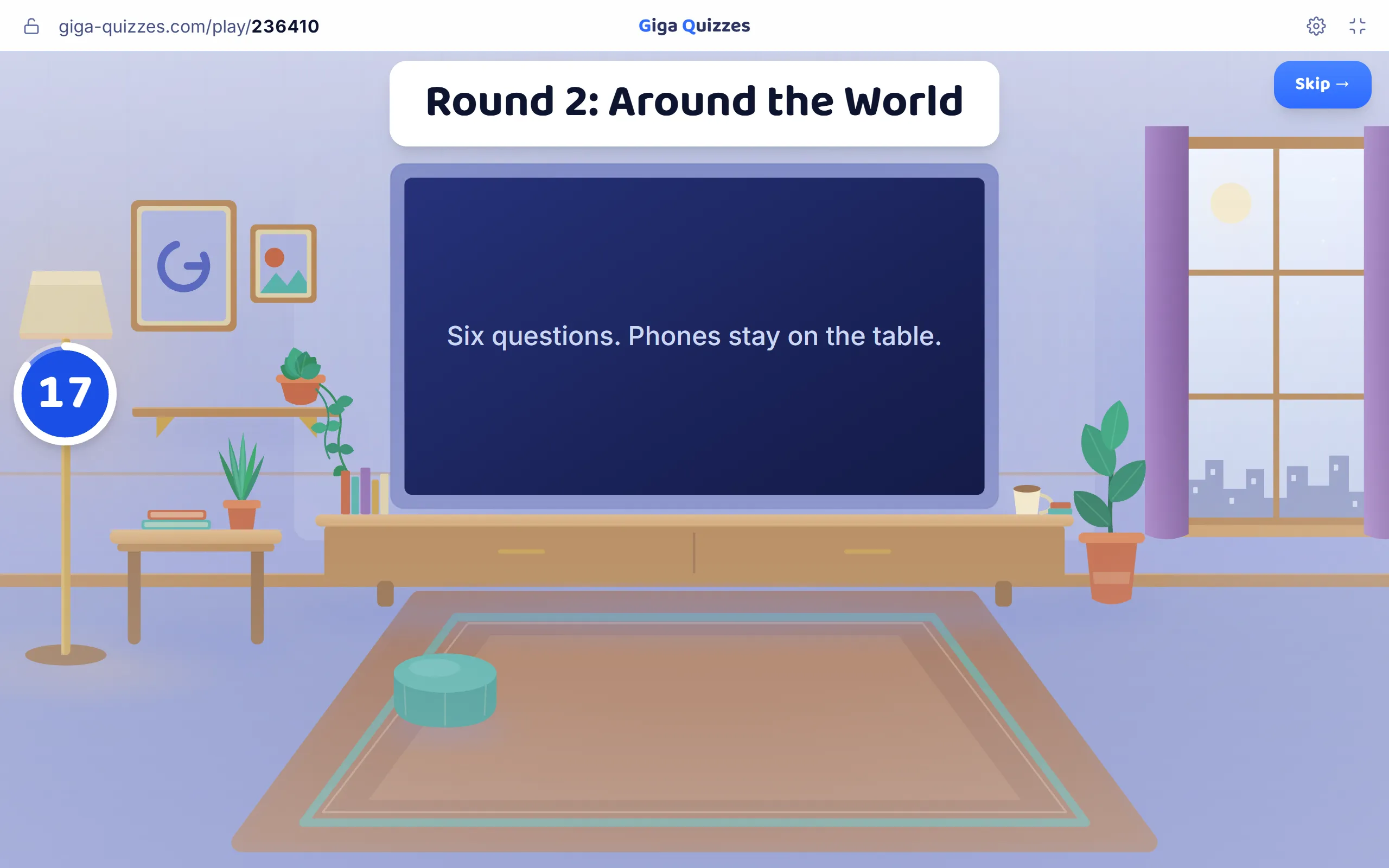
| 2 | Around the world | Multiple choice and a map | 10 min |
| 3 | Picture round | Photos that uncover themselves tile by tile | 15 min |
| 4 | Closest wins | A slider: the nearer the guess, the more points | 10 min |
| 5 | Put them in order | Drag the answers into the right order | 10 min |
Put the hardest round third, not last, so the night finishes on a high and nobody has given up before the final scores. And open every round with a title screen; it builds a little suspense and gives everyone a moment to top up their drinks.
Questions to start from
Stick to facts that will not change: heights, years, capitals, inventions. Records and populations go out of date, and a quiz built on lasting facts can be played again next year with a different crowd.
Sample questions, with answers
- General knowledge: Which planet is known as the Red Planet? (Mars.) What is the largest ocean on Earth? (The Pacific.)
- Around the world: In which country is Machu Picchu? (Peru.) Which river flows through Cairo? (The Nile.)
- Closest wins: In what year did people first walk on the Moon? (1969.) How many keys does a standard piano have? (88.)
- Put them in order, oldest first: the Colosseum, the Great Pyramid of Giza, the Burj Khalifa, the Eiffel Tower. (Pyramid, Colosseum, Eiffel Tower, Burj Khalifa.)
- Tie-breaker: How many bones are in the adult human body? (206. Closest guess wins.)
Let the arguments happen
The best moment of any quiz is the reveal of a question half the room was sure about. “What is the capital of Australia?” is a classic for a reason: Sydney is the famous city, so a good share of any crowd picks it, and the groan when Canberra comes up is worth the whole evening.
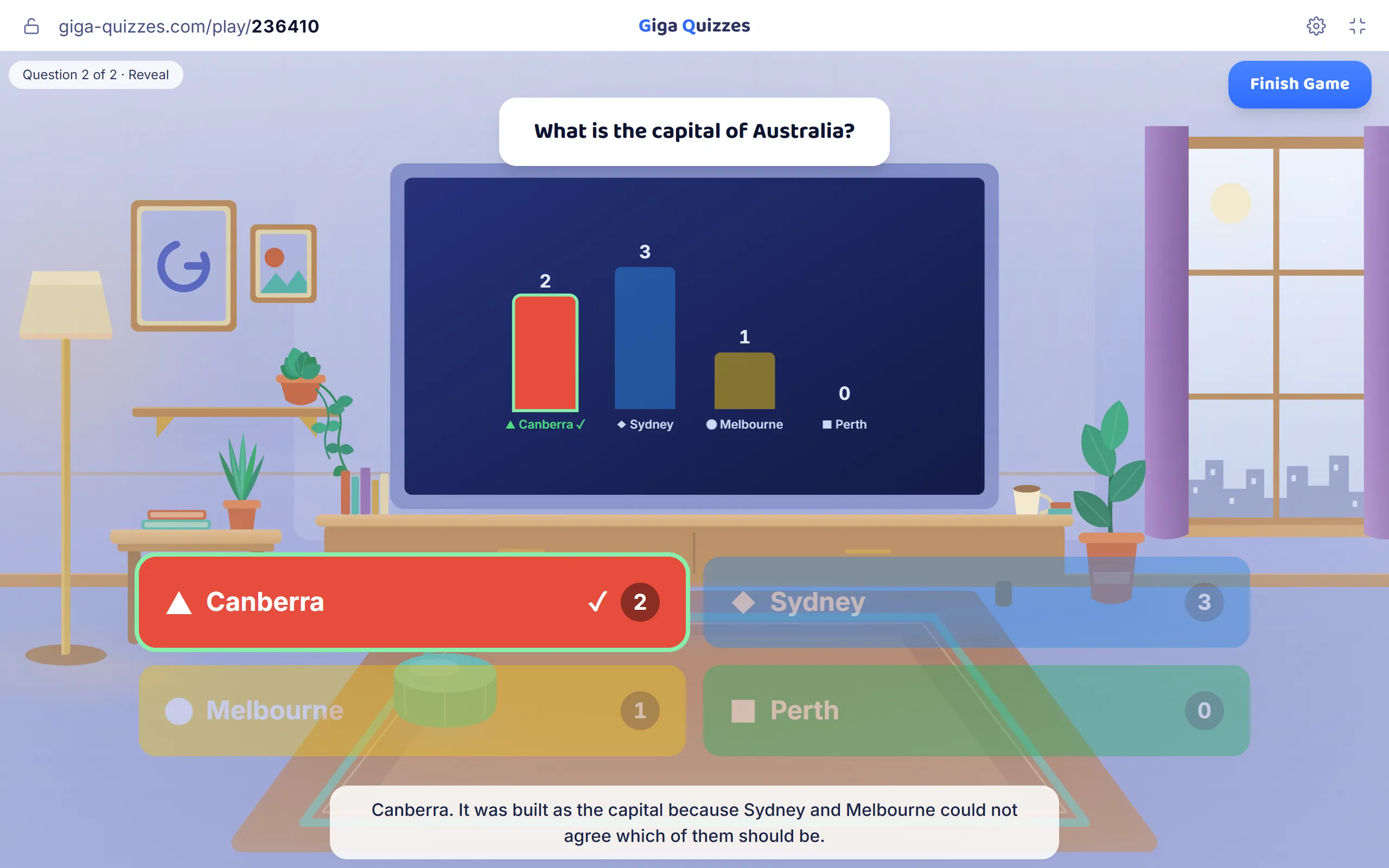
Give that moment room. Turn off Auto-advance screens in the game settings so nothing moves on until you press the button, and let the table that got it right gloat for a minute. A one-line explanation under the answer, such as why Canberra was built as a compromise between Sydney and Melbourne, turns the groan into a fact people repeat at the next party.
Play in teams
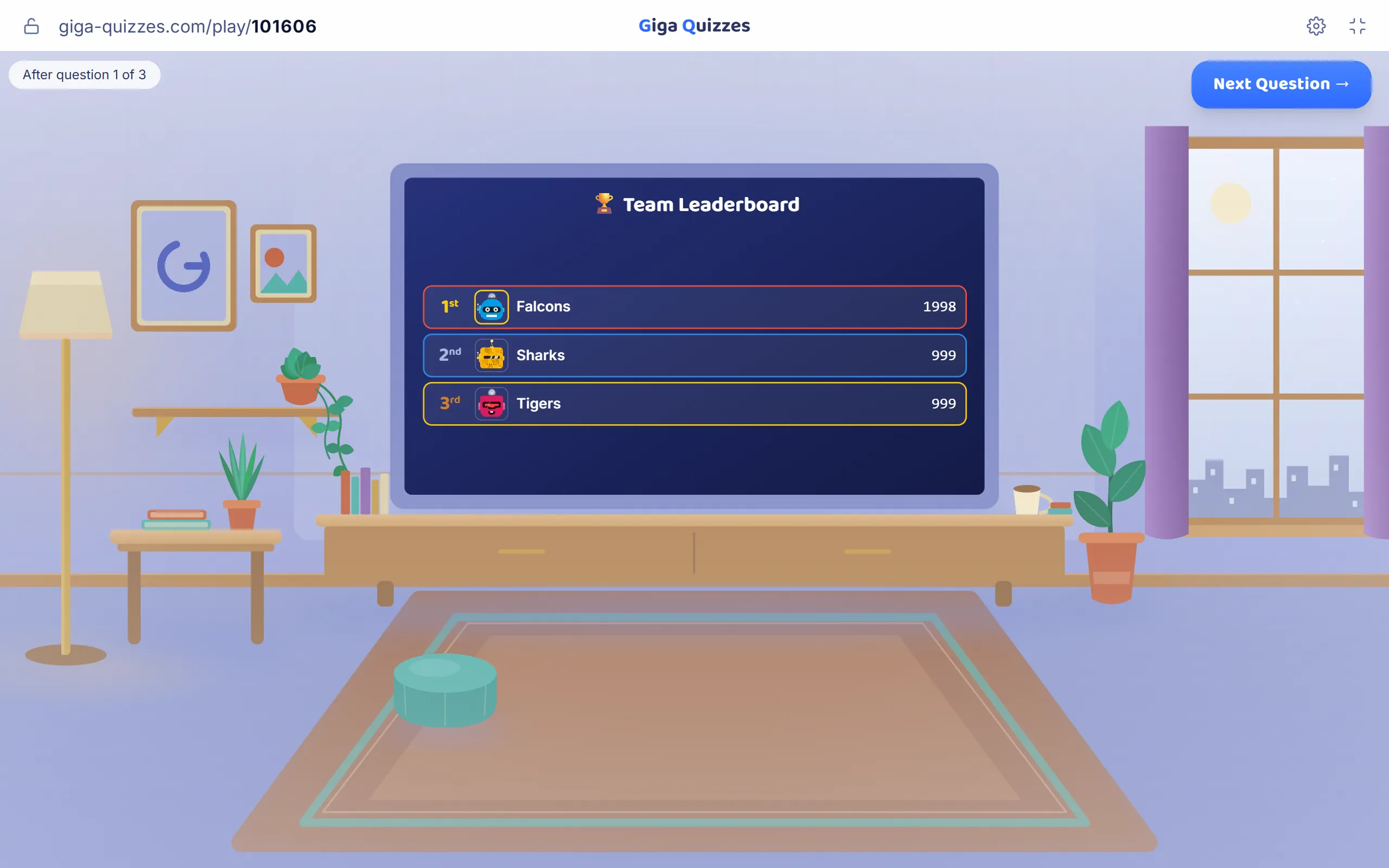
A pub quiz is a team sport. Teams of three or four are ideal: big enough to pool knowledge, small enough that everyone gets a say. Mix the generations if you can, so the round on 1980s music and the round on video games both have an expert somewhere.
Each player still answers on their own phone, and a team scores the points of all its players added together. That means a team does best when everyone answers, not when one person shouts the answer and the rest copy it, which keeps the quieter guests in the game. In Giga Quizzes, switch on Teams in the game settings; each team becomes a column in the lobby, where a click on its name lets the team type something suitably terrible.
Tips from the quizmaster’s chair
- Read every question aloud as it appears. It adds theatre and helps anyone sitting far from the screen.
- Give slow questions more time. A picture that uncovers itself, or five items to put in order, needs thirty to forty-five seconds.
- Slip a poll in between rounds, such as “Which snack wins tonight?” It scores nothing, and everyone has an opinion.
- Keep a tie-breaker ready: one number question where the closest guess wins.
- Announce the standings after each round, not after every question, to keep the suspense.
No time to write it? Play too
Writing thirty questions is fun but takes an evening. Discover, the free shelf of ready-made quizzes, has rounds that work well at home, such as World Capitals or Can You Find It on the Map?, where players tap the country on a world map. Press Host this quiz and it plays straight away.
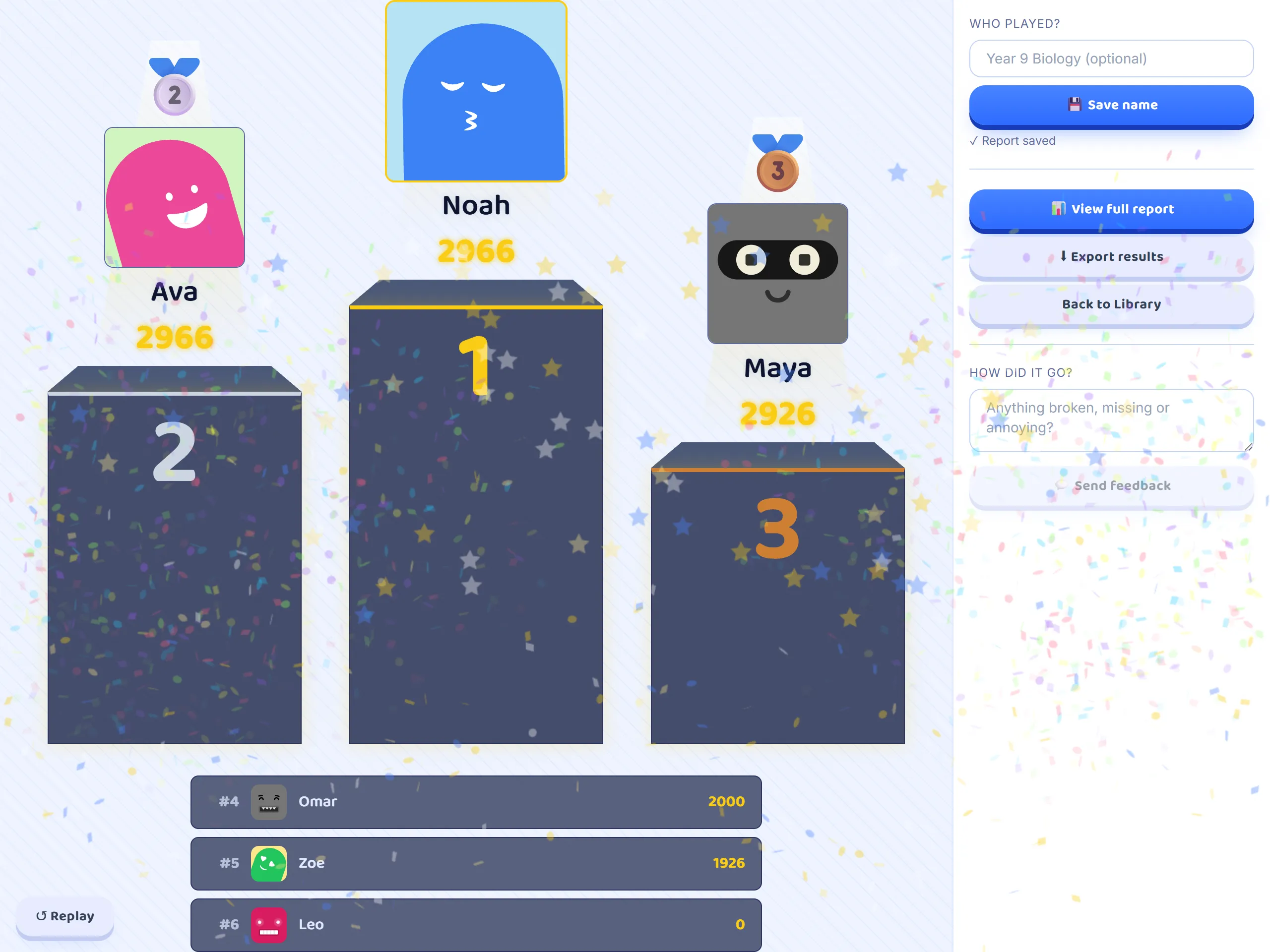
If you have not seen the questions before, you can compete as well as host. Switch on Host can also answer and you answer by clicking on the TV, with your own place on the leaderboard. The night ends on a podium, third place first, which is the moment to hand over the prize.
Try it in Giga Quizzes
Free, in the browser, and nothing for your students to install. These guides show each step on the real screens.
New to Giga Quizzes?
Free live quizzes in the browser. Students join from any phone, with no app.
Make your first quiz →