Friday Afternoon: Start the Lesson with a Quiz
Friday afternoon is the hardest slot of the week. Open with a short, lively quiz instead of saving the fun for the end. A five-minute formula, and rounds to borrow.
 By the Giga Quizzes team4 min read
In this post
Every teacher knows the Friday afternoon lesson. The week has worn everyone out, the weekend is close enough to taste, and the class drifts in with the energy of a wet sock. The usual move is to promise something fun at the end if everyone works hard first. It rarely works. The better move is the opposite: put the fun at the start, lift the room in the first five minutes, and let that energy carry the rest of the lesson.
Why the start, not the end
The first few minutes of a lesson set its mood. A class that starts slumped tends to stay slumped, and a reward promised for forty minutes later is too far away to change how anyone feels now. A class that starts laughing, arguing over an answer and cheering a winner arrives at the real work awake.
A quick game also gets every student doing something within a minute of walking in. There is no slow drift into the lesson while bags are unpacked and weekend plans are discussed. The room code goes up, phones come out, and the class is in. By the time the game ends, the people who usually take ten minutes to settle have been answering questions for five.
The five-minute formula
| Minute | What happens | Why |
|---|---|---|
| 0–1 | Room code on the board; everyone joins | The lesson starts as students arrive |
| 1–4 | Four or five fun, fast questions | Laughter, noise, every phone answering |
| 4–5 | One question that leads into today’s topic | The energy turns towards the lesson |
| 5 | Podium, applause, phones away | A clear line between game and work |
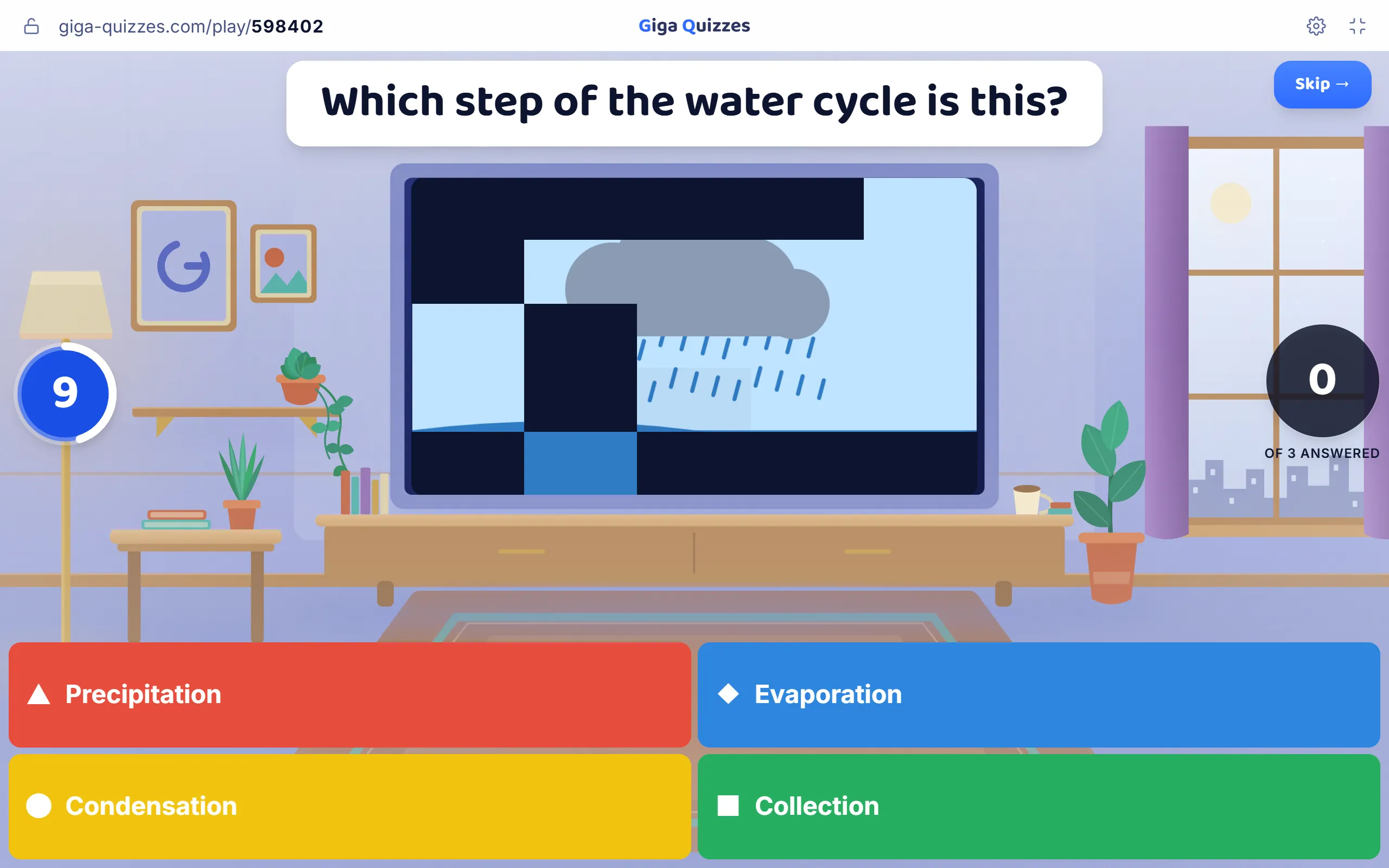
Keep the timers short, around fifteen seconds, and the questions visual where you can. Picture questions get far more reaction than text, especially ones that uncover themselves tile by tile while the whole class shouts guesses.
Ideas for fun rounds
Rounds that work on a Friday
- Guess the landmark from a photo that uncovers itself slowly.
- Which is older? The Eiffel Tower or the Statue of Liberty? (The statue, by three years.)
- Higher or lower: is the Amazon longer or shorter than the Nile? (Experts still argue, which makes for a good argument in class too.)
- Odd one out: tomato, cucumber, carrot, pepper. (The carrot is the only one that is not a fruit, botanically.)
- Closest guess wins: how many bones in an adult human body? (206.)
- Teacher trivia: three true-or-false statements about you.
- Flags with a twist: pictures of four similar flags, one question.
None of these has to be on the curriculum. The aim of the opener is energy, not coverage, and a class that is enjoying itself is a class that is paying attention.
No time to build one? Use Discover
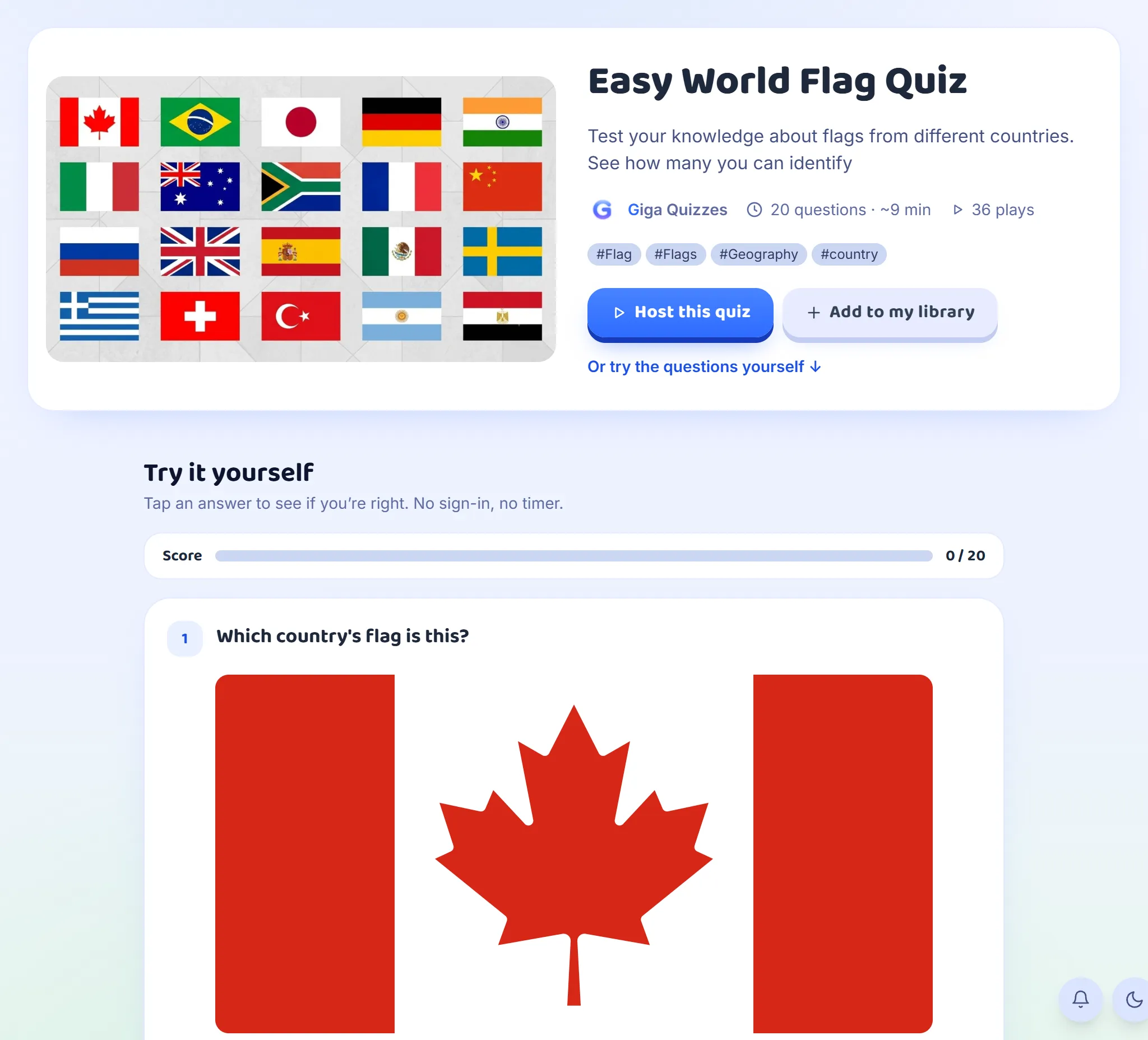
A Friday opener should not cost you an hour on Thursday night. Discover, the free shelf of ready-made quizzes on Giga Quizzes, has short, fun rounds on flags, capitals, maps and more. Press Host on a card, or Host this quiz on its page, and it goes straight to the room code without being added to your library.
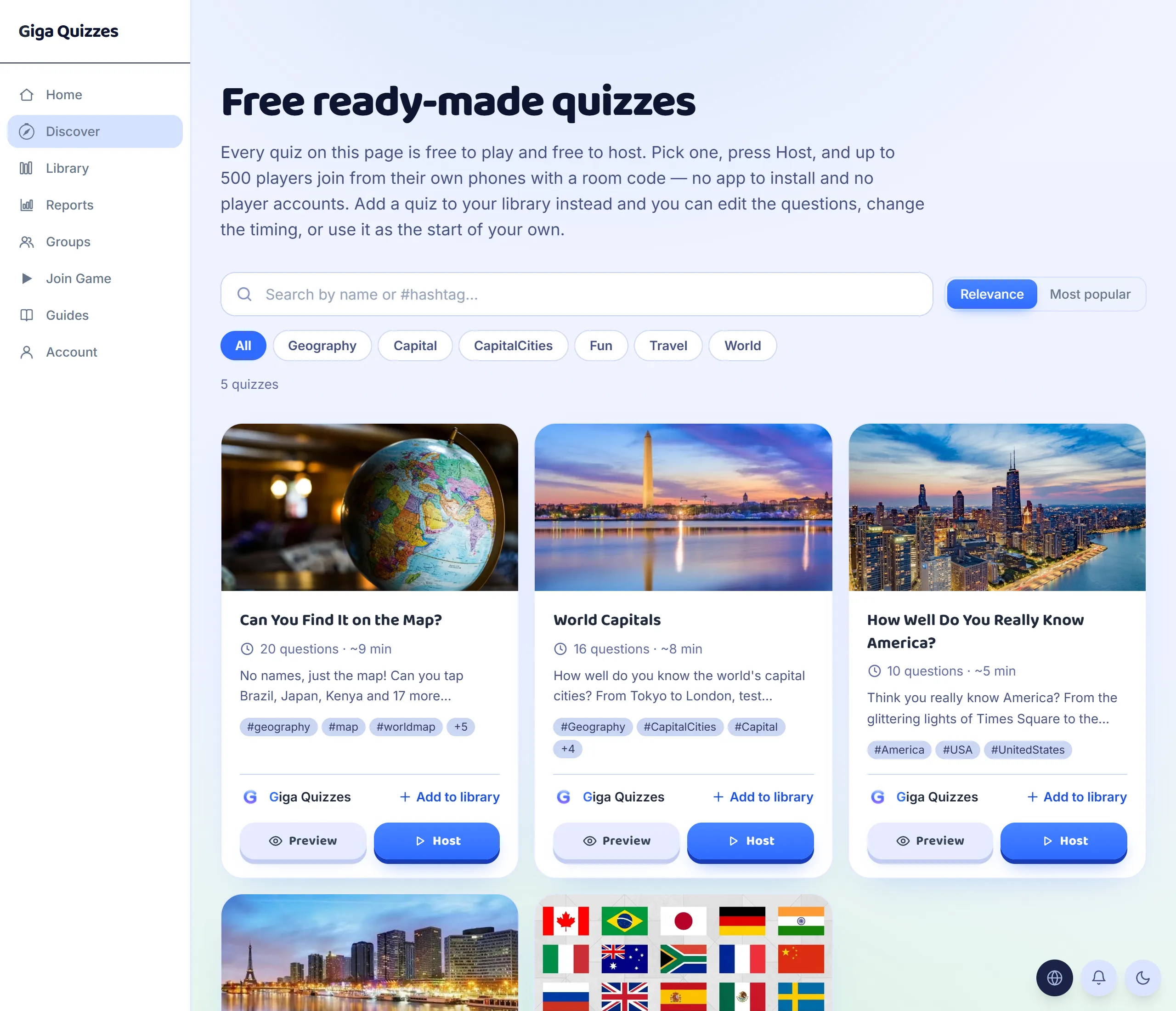
Some quizzes there are marked #customizable: click their number of questions to play fewer of them, picked at random each time, which is perfect when you want exactly five minutes and a different selection every week. Two that work well are World Capitals and Can You Find It on the Map?, in which the class taps countries on a world map.
Bridge into the lesson
The last question of the opener steers the energy towards the real work. It should be just as fun as the others, but about today’s topic.
| Today’s lesson | A bridging last question |
|---|---|
| The Romans | Which of these did the Romans not have: roads, central heating, or paper money? |
| Fractions | A pizza is cut into 8 slices and you eat 3. What fraction is left? |
| Persuasive writing | Which of these advert slogans is the most convincing? (A poll, no right answer.) |
| The water cycle | True or false: the water you drank today may once have been drunk by a dinosaur. |
The water cycle one is true, and gets a gratifying “ugh” from the room. Students arrive at the topic already curious about it, which is the whole point.
Keep the middle from sagging
A strong start is most of the battle, but a Friday lesson can still dip in the middle. Two small tricks help. Halfway through, run a quick poll about the topic, a question with no right answer such as “Which of these inventions would you rather have made?”, and everyone is answering again within thirty seconds. And end with a two-question check on what was learned, so the week finishes on a small win.
Now and then, play the opener in teams. On a Friday a team game lifts the room more than a solo one, because there is always someone to cheer for.
Make it a ritual
The Friday quiz works best as a habit. When students know every Friday starts with a game, they come in ready for it, and some will start asking on Thursday what the topic will be. Hand them some of the choice: the winner of this week’s quiz picks next week’s theme from a short list. It is a small thing that turns the hardest lesson of the week into one students look forward to.
Try it in Giga Quizzes
Free, in the browser, and nothing for your students to install. These guides show each step on the real screens.
New to Giga Quizzes?
Free live quizzes in the browser. Students join from any phone, with no app.
Make your first quiz →