Turn Any Lesson into Quiz Questions in 10 Minutes
A ten-minute routine for turning a lesson plan into a short quiz that checks understanding, worked through step by step on a lesson about the seasons.
 By the Giga Quizzes team4 min read

In this post
Writing a quiz can feel like planning a second lesson, and in a busy week there is no time for that. It does not have to take long. With a simple routine, a lesson you have already planned can become a short, useful quiz in about ten minutes. The trick is to write fewer questions and better ones. Below, the routine is worked through on a real example, a lesson on why we have seasons, so you can see each step produce something.
Minutes 1–2: find the key ideas
Look at the lesson plan and ask: if students remember only three or four things from this lesson, what should they be? Write each one as a plain sentence. Everything else in the lesson, the examples, the practice, the detail, exists to support those sentences.
The seasons lesson, in four sentences
- The Earth’s axis is tilted.
- Because of the tilt, sunlight hits each half of the Earth more directly at some times of year than others.
- When it is summer in one hemisphere, it is winter in the other.
- The seasons are not caused by the Earth getting closer to the Sun.
These four sentences are the skeleton of the quiz. Notice the last one: it is there because of a mistake students commonly make, which we will come back to.
Minutes 3–6: one question per idea
Write one question for each key idea, and aim for questions a student can only answer if they understood it, not just read it. The easiest way is to change the question stem.
| A memory question | The same idea, as an understanding question |
|---|---|
| What is the Earth’s axis? | In June, which hemisphere is tilted towards the Sun? |
| Which hemisphere is Australia in? | It is summer in Canada. What season is it in Australia? |
| What causes the seasons? | Why are summer days warmer than winter days? |
Stems that usually test understanding
- Which of these is an example of…?
- What would happen if…?
- Why does…?
- Which of these would change if…?
- What is the difference between…?
Questions that begin “What is the name of…” test memory. They have their place, but a quiz made only of names tells you who memorised the page, not who understood it.
Minutes 7–8: wrong answers from real mistakes
This is the step that turns a quiz into a diagnostic tool. For each question, ask what a student who misunderstood would answer, and make that one of the options. For “Why are summer days warmer?”, the obvious wrong answer is “because the Earth is closer to the Sun”. Astronomy education research has found that explanation again and again, in children and adults alike; Anthony Lelliott and Marissa Rollnick’s review of more than thirty years of studies counts it among the common alternative ideas about the seasons.
So it goes on the screen, alongside two other plausible ideas, and the reveal shows you how many of your students hold it. In this class it was half of them.
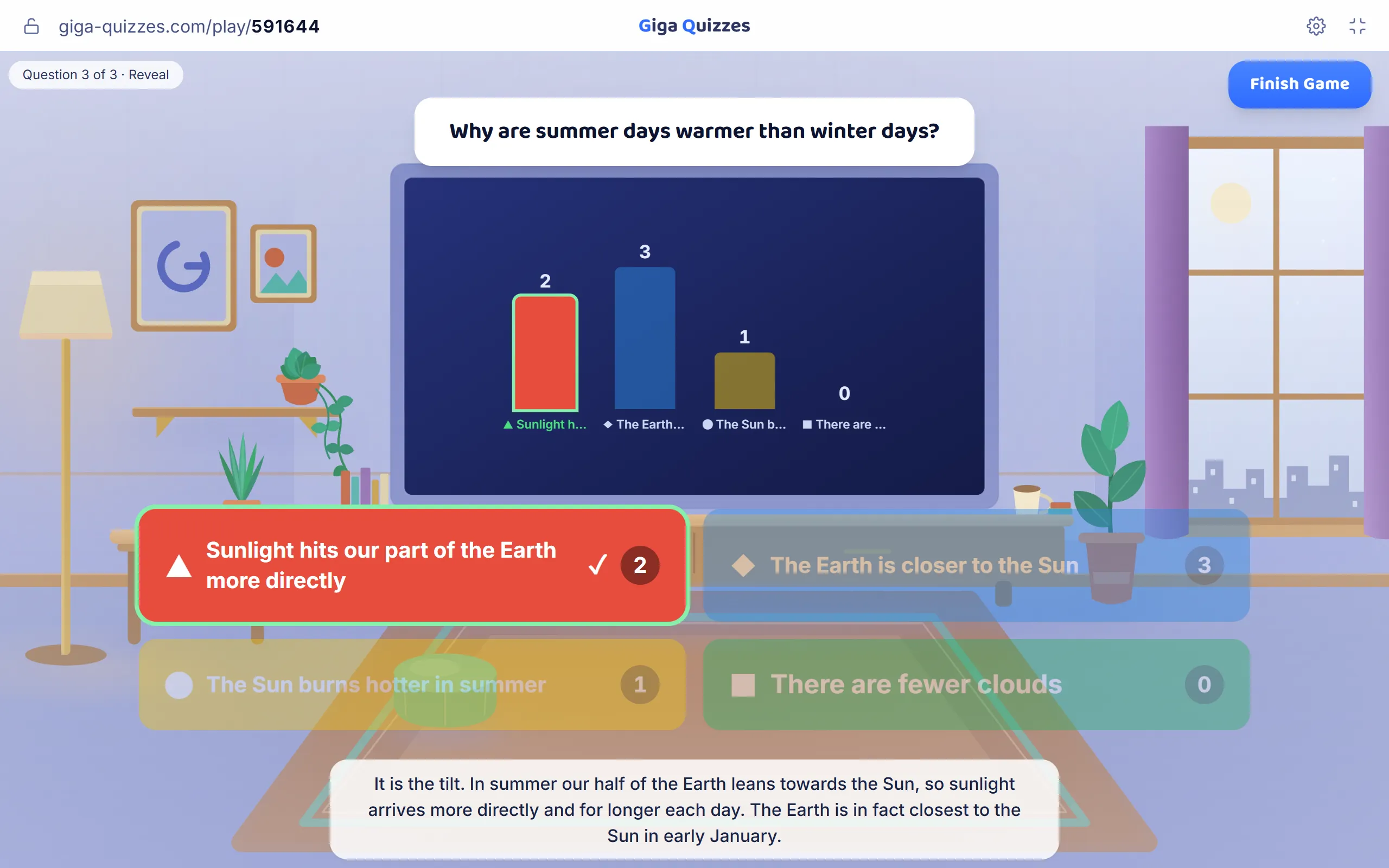
A wrong answer nobody would pick shows you nothing. If you cannot think of a real mistake for a question, a true-or-false statement may be the better format for it.
Minutes 9–10: a slide and some explanations
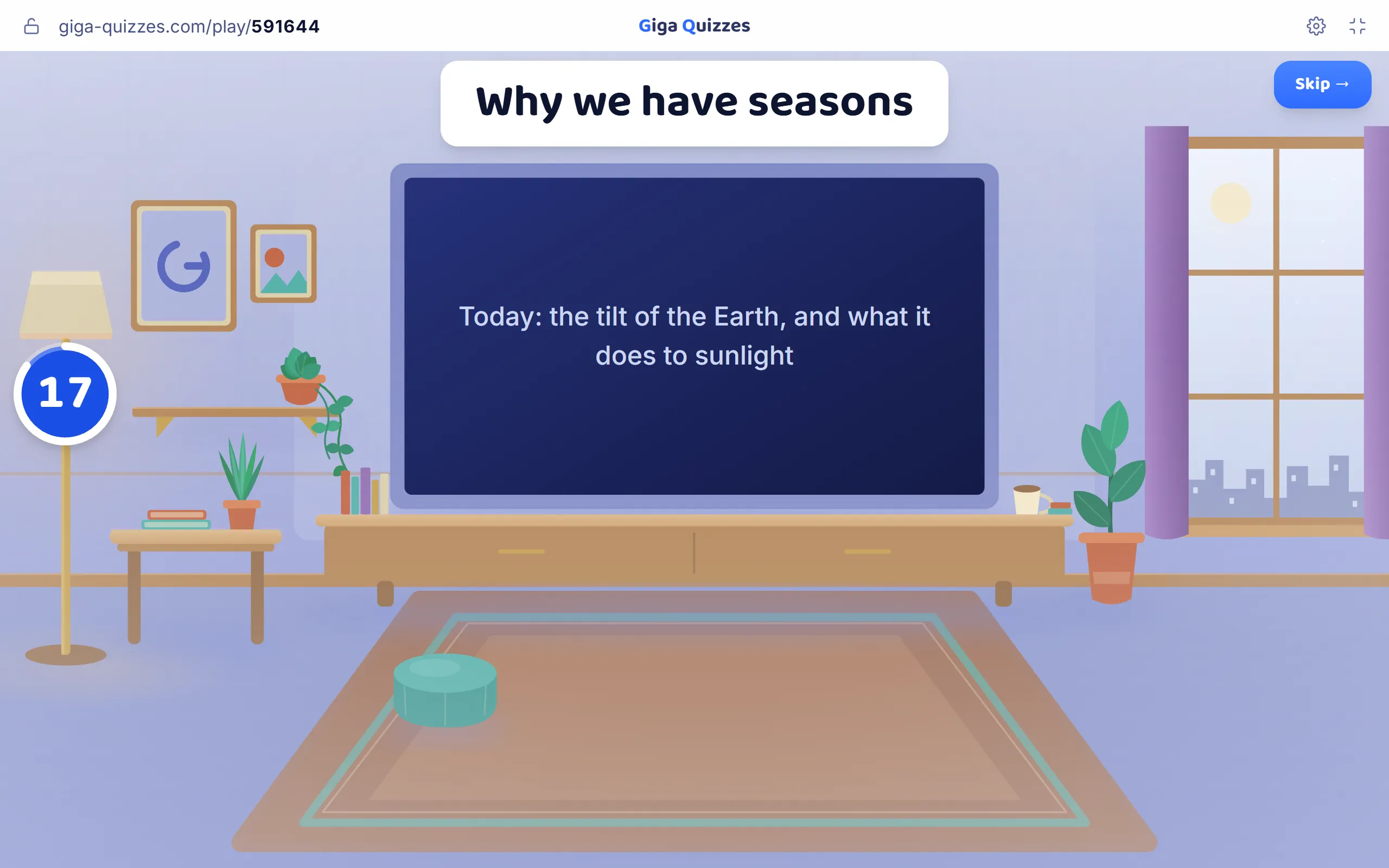
Two small additions make the quiz teach as well as test. First, a title slide at the start that names the topic, so the game opens with a frame rather than a cold question. Keep it neutral: a slide that gives away the answers turns the quiz into a reading test.
Second, one or two sentences of explanation for each question, which appear at the reveal on the big screen and under each student’s own result. Write the explanation so it speaks to the wrong answer you expect. For the seasons question: “It is the tilt. In summer our half of the Earth leans towards the Sun, so sunlight arrives more directly and for longer. The Earth is in fact closest to the Sun in early January.”
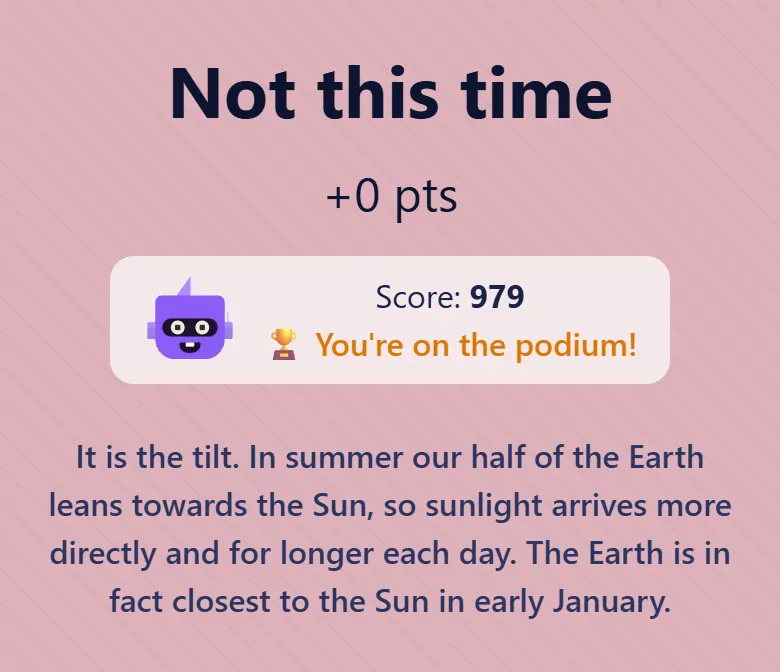
That last sentence does a lot of work. Students who believed the distance idea now have a fact that contradicts it, and it is a fact surprising enough to remember.
Don’t start from nothing
You do not need to write every question yourself. In the Giga Quizzes editor, + Add question offers two shortcuts under the grid of question types. From my bank lists the questions in all your other sets, so a good one from last year’s quiz can be reused. From Discover searches public quizzes and copies the questions you tick into your set, where you can edit them.
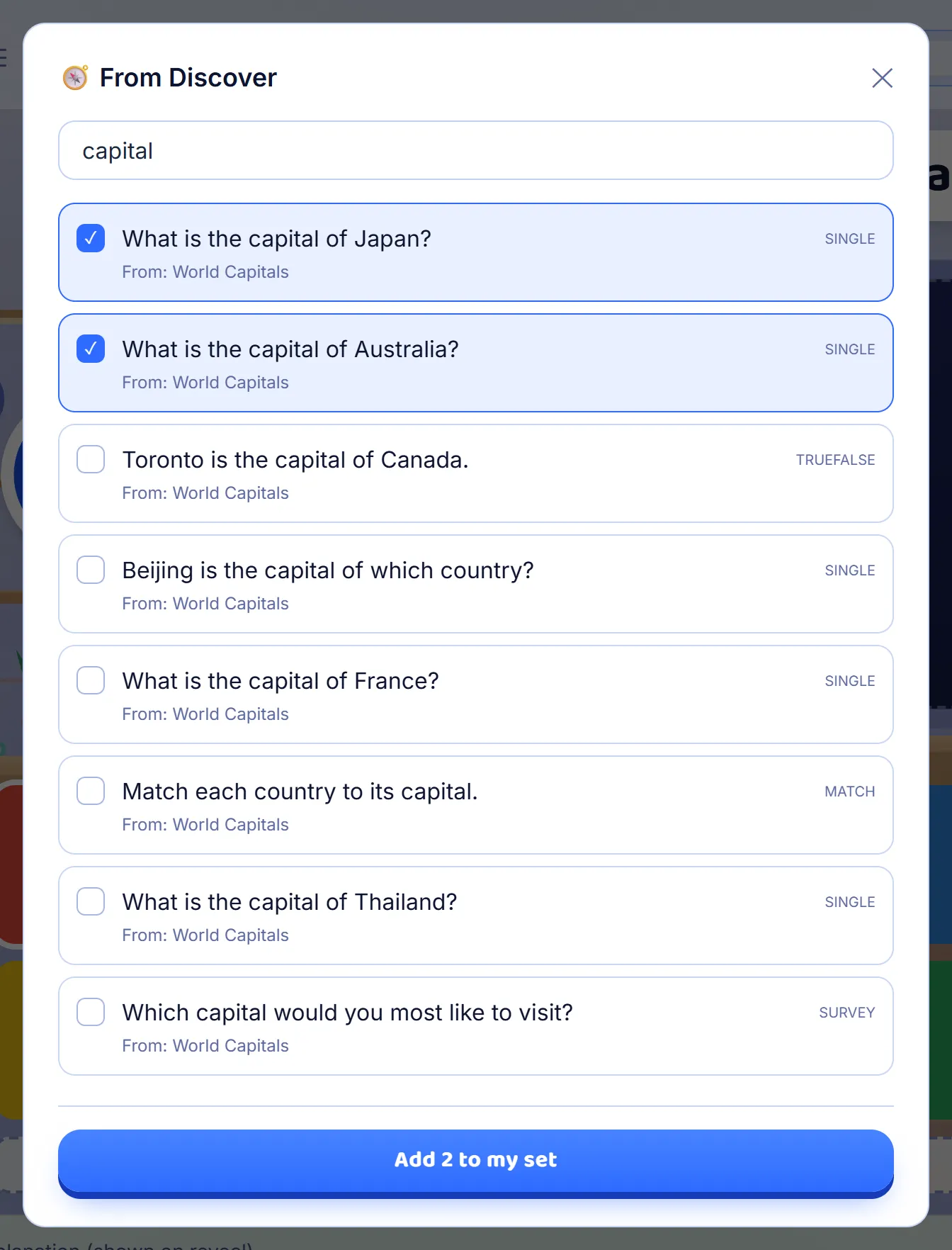
Borrowing two or three and writing the rest is often the quickest route to a quiz that fits your lesson exactly. The borrowed ones still need the step above, though: check that their wrong answers are mistakes your students would make.
The finished quiz
Ten minutes later, the seasons lesson has a quiz: one title slide, four questions built on the four key ideas, each with a wrong answer taken from a real misconception, and an explanation at every reveal. Run it at the end of the lesson or the start of the next. Whatever the class gets wrong is where the next lesson begins.
If this is your first quiz, the guide to creating your first quiz goes from an empty library to a live game step by step.
Sources
- Lelliott, A. & Rollnick, M. (2010). Big ideas: A review of astronomy education research 1974–2008. International Journal of Science Education, 32(13), 1771–1799.
Try it in Giga Quizzes
Free, in the browser, and nothing for your students to install. These guides show each step on the real screens.
New to Giga Quizzes?
Free live quizzes in the browser. Students join from any phone, with no app.
Make your first quiz →