5 Common Quiz-Writing Mistakes, and How to Fix Them
Too little time, wrong answers nobody picks, questions longer than their timer, trick wording and a silent reveal: five quiz-writing mistakes, with before-and-after fixes.
 By the Giga Quizzes team5 min read

In this post
When a classroom quiz falls flat, the topic is rarely to blame. It is the small things: a timer that ran out before anyone finished, an answer nobody would ever choose, a question so long that the slower readers never reached the end of it. Each of these is easy to spot once you know what to look for, and most take a minute to fix. Here are the five that come up most often, each with a before and an after.
1. Too little time for questions that need it
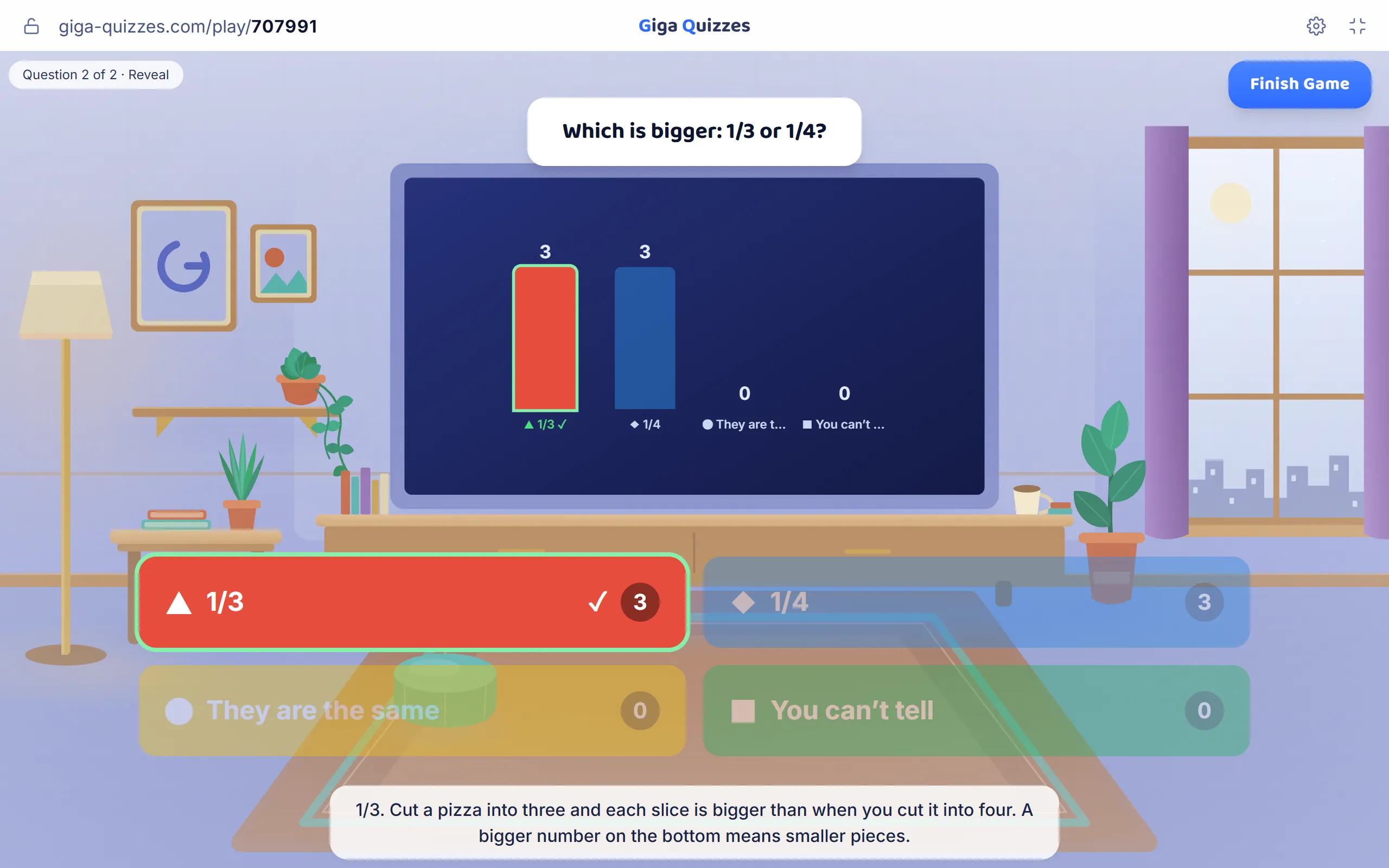
Tapping a coloured tile takes a second. Putting six events in order, or connecting eight words to their meanings, takes far longer: students read every item, think, and then drag each one into place. Give an ordering question the same twenty seconds as a quick multiple-choice question and the result is a room full of half-finished answers and students who feel cheated by the clock.
Count the work in the question, not the question itself. As a starting point:
| Kind of question | Time to start from |
|---|---|
| True or false, or single choice with short answers | 15–20 seconds |
| Single choice with long answers, or a picture to study | 20–30 seconds |
| A typed answer of a word or two | 30 seconds |
| Ordering, four to six items | 45–60 seconds |
| Matching, six to eight pairs | 60–90 seconds |
In Giga Quizzes the seconds sit in the Time box above each question, and new typed and matching questions already start with more than a tap question does. It is still worth a glance down the list before every game.
2. Wrong answers nobody would pick
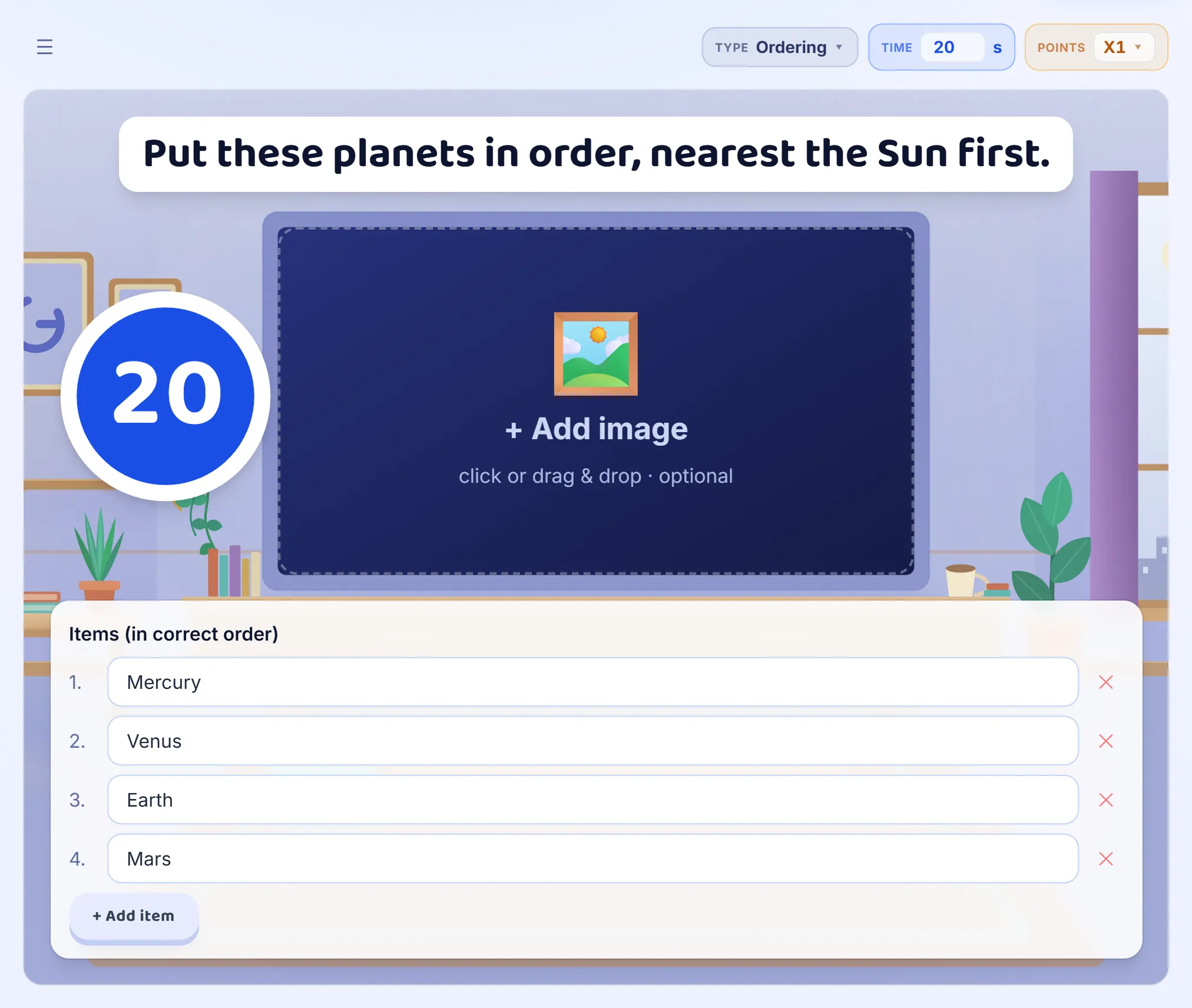
A multiple-choice question is only as good as its wrong answers. Ask for the capital of France and offer Banana, Tuesday and Blue as the alternatives, and every student gets it right, including the ones who have never heard of Paris. You have spent a question and learned nothing.
The best wrong answers are the mistakes students really make. Ask what a student who half-understood the topic would choose. In maths, it is the number you get from the usual slip. In science, the everyday belief that sounds right. In history, the event from the right century but the wrong country. A long-standing review of item-writing advice by Thomas Haladyna and colleagues puts it the same way: base the wrong options on typical errors, and make every one of them plausible.
Before and after
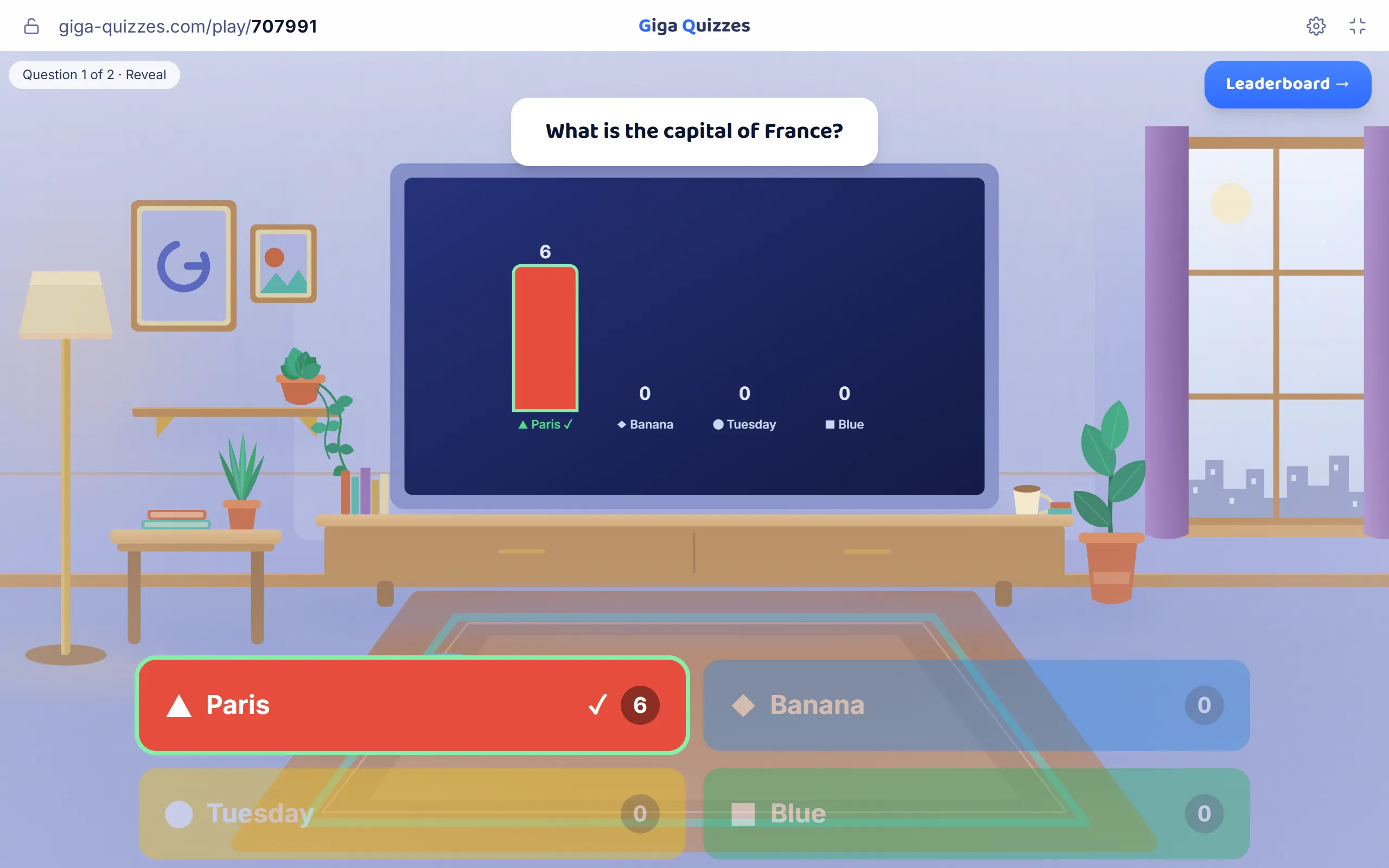
Before: “Which is bigger, 1/3 or 1/4?” with 1/3, 7, a triangle and “purple”. After: 1/3, 1/4, “They are the same” and “You can’t tell”. Now the students who think a bigger number on the bottom means a bigger fraction have somewhere to go, and you can see how many of them there are.
3. A question longer than its timer
A question that takes fifteen seconds to read and has a twenty-second timer is really a five-second question for most of the class, and a reading test for everyone else. Long questions punish slow readers and students working in a second language, even when they know the material well.
Before and after
Before: “In 1492, after a long voyage paid for by the Spanish crown, which he had spent years persuading, Christopher Columbus reached land across the Atlantic. Where did he first come ashore?” After: “Where did Columbus first land in 1492?” (The Bahamas, Florida, Mexico, Brazil.)
Read each question aloud before the game. If it takes more than a breath, cut the background, the extra clause and the second example. If the context really matters, put it on a slide before the question, where everyone can read it without a clock running.
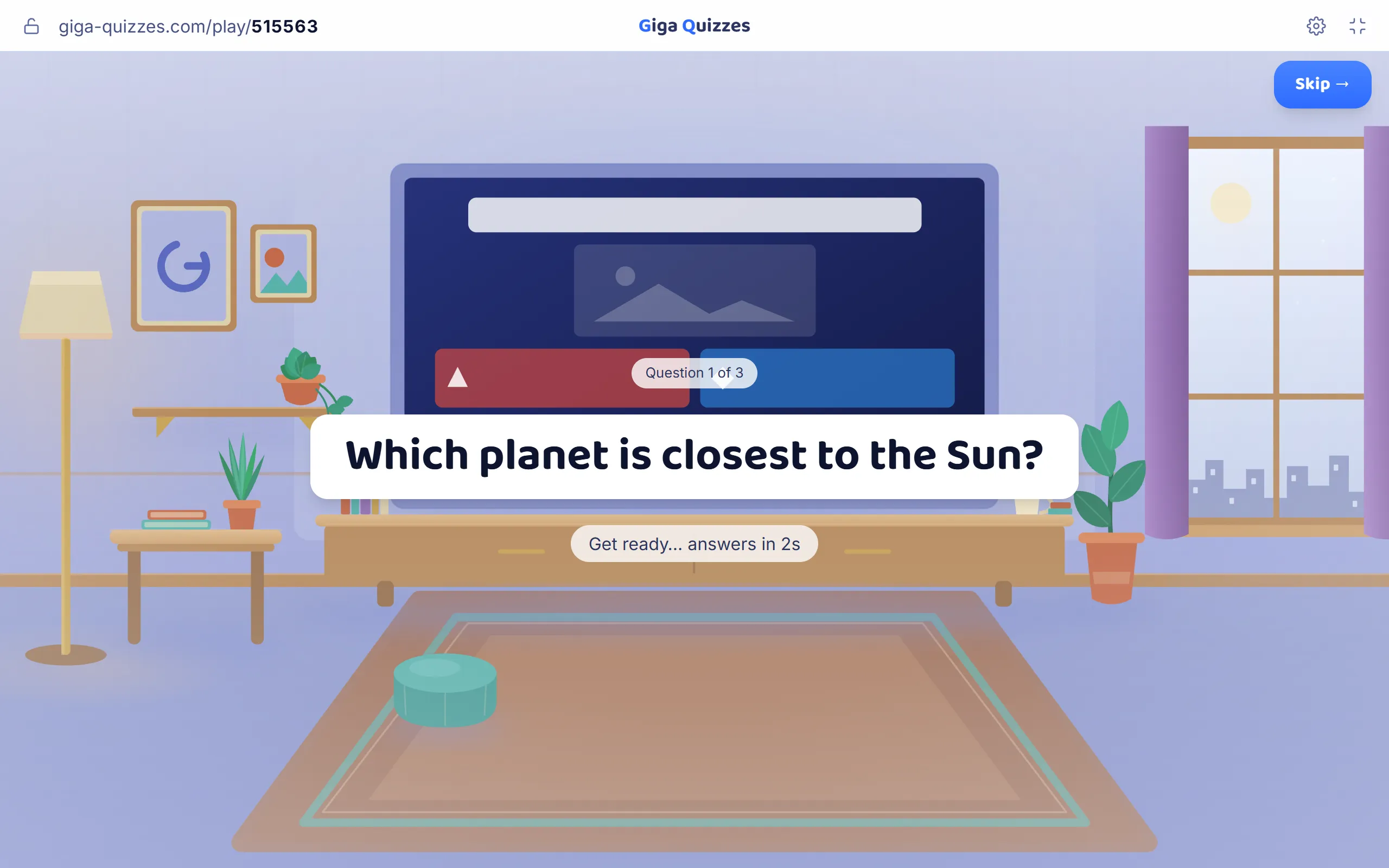
A fair start helps too. With Reveal answers after 3s switched on, each question appears alone for three seconds before the answers do, so the fastest reader in the room cannot answer before everyone has read it.
4. Trick wording
Some questions test careful reading rather than the subject. The usual suspects:
- “Which of these is not a mammal?”, where students who know their mammals still slip under time pressure.
- Double negatives, such as “Which statement is not untrue?”
- “All of the above”, which a student can often pick by spotting two right answers, and “None of the above”, which tells you little even when it is right.
- Answers that differ by one small word, which turn the question into a spot-the-difference puzzle.
Item-writing guides have warned against these for decades, and students sense them immediately: a trap makes them stop trusting the quiz. Turn negatives around where you can. “Which of these is a reptile?” tests the same knowledge as “Which of these is not a mammal?” without the trap. If a “not” question is genuinely the best way to ask, make the word bold or capitals and keep it to one per quiz.
5. A reveal that teaches nothing
The moment after the answer appears is the best teaching moment in the whole quiz. Every student has just committed to an answer and wants to know if they were right. If the screen shows the letter and moves on, that moment is gone, especially for the students who got it wrong and still do not know why.
Write one or two sentences per question that say why the right answer is right, and if there is room, why the tempting wrong one is wrong. The fractions question above does it in two: cut a pizza into three and each slice is bigger than a quarter. In Giga Quizzes this goes in the Explanation box under each question, and it shows at the reveal, both on the board and on each student’s phone. The guide to making a quiz that teaches goes through it step by step.
A two-minute check before you host
- Does every slow question, ordering, matching or typed, have enough time?
- Would a real student choose each wrong answer?
- Can every question be read aloud in one breath?
- Is any question a trap rather than a test?
- Does every question explain itself at the reveal?
Five questions, two minutes, and the difference between a quiz students put up with and one they ask to play again.
Sources
- Haladyna, T. M., Downing, S. M. & Rodriguez, M. C. (2002). A review of multiple-choice item-writing guidelines for classroom assessment. Applied Measurement in Education, 15(3), 309–333.
Try it in Giga Quizzes
Free, in the browser, and nothing for your students to install. These guides show each step on the real screens.
New to Giga Quizzes?
Free live quizzes in the browser. Students join from any phone, with no app.
Make your first quiz →