Getting to Know a New Class with Polls
What do your new students enjoy, how do they like to work, and what worries them? A ten-poll set that answers in minutes, what to do with each result, and how to keep it comfortable.
 By the Giga Quizzes team4 min read

In this post
Getting to know thirty new students takes weeks. Names come first, then personalities, and only much later what each student enjoys, how they like to work and what makes them anxious. A short set of live polls in the first days will not replace that slow process, but it gives you a picture of the whole class on day one. It also gives every student a voice before they have worked out whether it is safe to use it in front of the others.
Why polls rather than a questionnaire
A paper questionnaire tells you about each student, but it takes an evening to read and the class never sees the results. A live poll works the other way round. Everyone answers at once on their phones, the totals go up on the board straight away, and the whole room sees what the room thinks, without seeing who thinks it.
That shared moment is the point. The student who assumed they were the only one who finds the subject stressful sees that a third of the class feels the same. The student who loves drawing finds out who else does. Within ten minutes the class has started to become a group.
A ten-poll set, and what each one is for
Mix light questions with a few that will change how you teach. Ten polls take about ten minutes with a sentence of comment after each.
| Poll | Answers | What you do with it |
|---|---|---|
| What do you do most in your free time? | Sport, music, games, reading, art, being outside | Examples and word problems that land |
| Describe yourself in one word | Typed, shown as a word cloud | A first laugh, and some names to remember |
| How do you like to learn something new? | Watch someone, read about it, try it myself, talk it through | A starting point for a conversation about learning |
| Alone, in pairs or in groups? | The three, plus “depends on the task” | How to seat and group the class |
| How do you feel about this subject? | Love it, it is fine, not my favourite, it is not for me | Where to pitch the first weeks |
| What worries you most about this year? | Tests, homework, keeping up, making friends, nothing | What to reassure them about, out loud |
| How do you prefer to get feedback? | Written, spoken, a quick mark, all of these | How to hand work back |
| How much homework time do you have on a weeknight? | Ranges in minutes | How much to set |
| Which topic are you most looking forward to? | The unit titles for the year | What to trail early as a hook |
| If you could visit anywhere, where? | Typed, shown as a word cloud | A light finish |
What the results look like
The charts are surprisingly informative, even with a small group. Here, half the students said they learn best by trying something themselves, and nobody chose reading about it first.
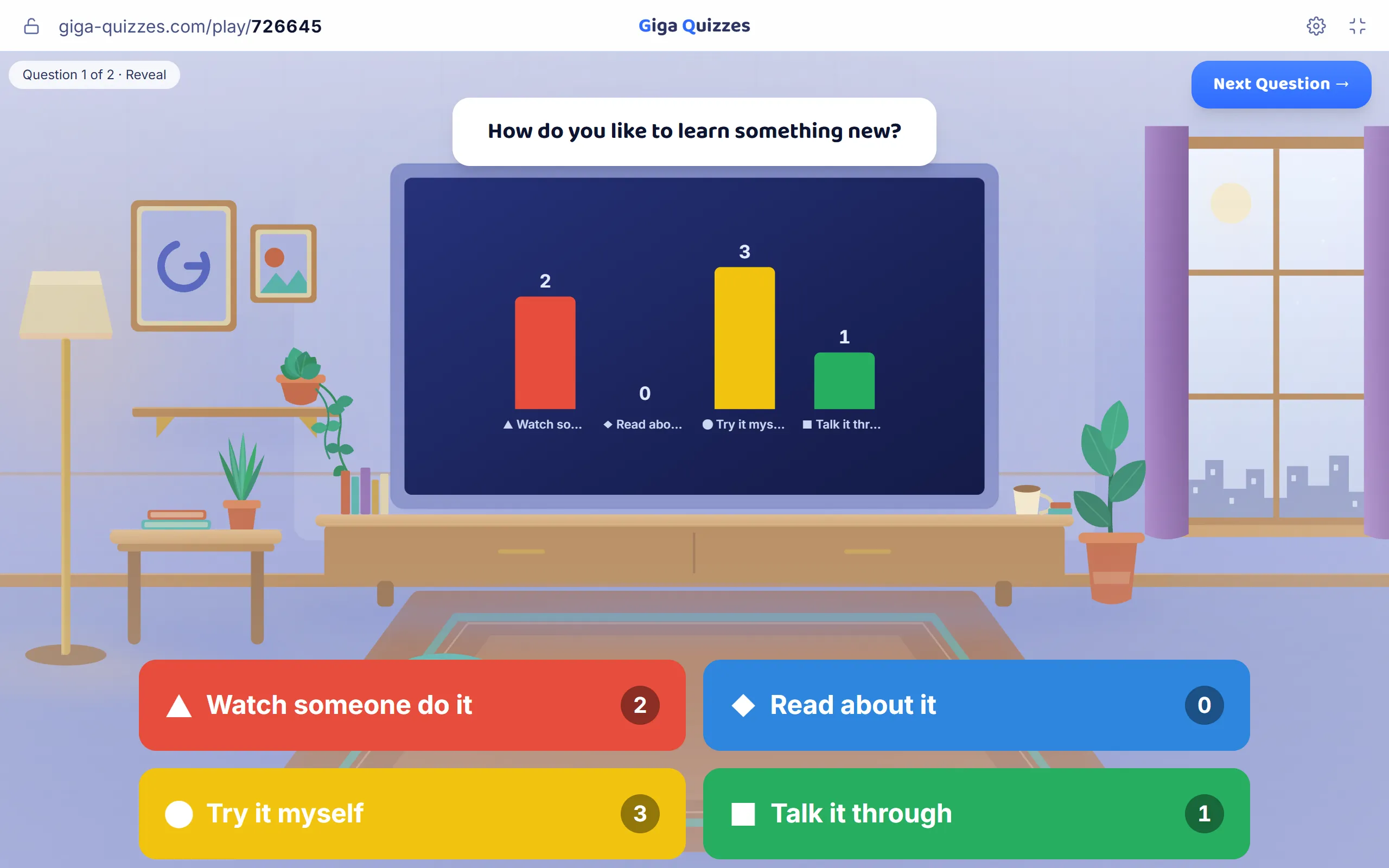
One honest caution about that particular poll. Knowing how students like to learn is useful for building rapport and planning variety, but research does not support the popular idea that teaching each student in their preferred “learning style” improves results. Harold Pashler and colleagues reviewed the evidence and found almost no well-designed studies that showed it. Treat the answers as preferences worth talking about, not as a prescription.
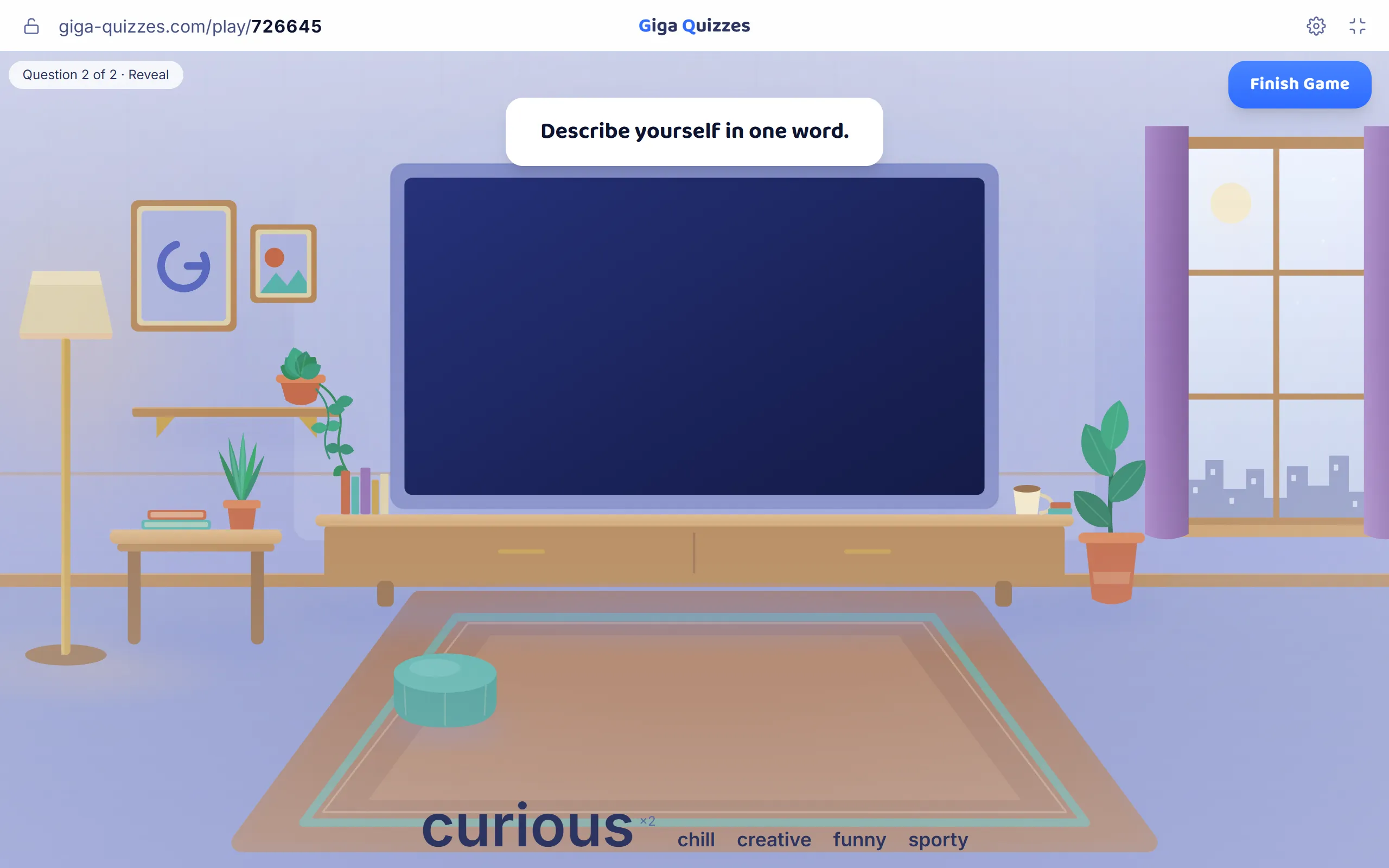
Typed polls bring out more personality. A word cloud of thirty one-word self-descriptions is one of the best icebreakers there is, because every word is somebody, and students immediately start guessing who.
Keep it comfortable
Students are still deciding whether to trust you. Choose questions that are easy to answer honestly in front of others, even anonymously. Leave out family, money, health and anything a student might be embarrassed by. Give every question a way to stay neutral, such as “not sure” or “a bit of everything”.
What to say before the first poll
- Nobody’s name appears next to their answer on the board.
- I will see the answers afterwards, and I will use them to plan.
- There are no wrong answers, and nobody will be asked what they chose.
Then keep the promise. If a result surprises you, talk about the result, never about who might have given it.
Let the results start conversations
Each chart deserves a sentence or a question. Do not just glance at it and move on.
- “Most of you like to try things yourselves first. Good: we will do a lot of that, and I will show you how to get unstuck.”
- “Quite a few of you are worried about keeping up. That is normal in September, and here is what we will do about it.”
- “Look at the word cloud. Who wants to explain ‘chaotic’?”
These short exchanges teach students that their answers matter, which makes them more likely to answer honestly the next time you ask how a lesson went.
Keep the results, and ask again in June
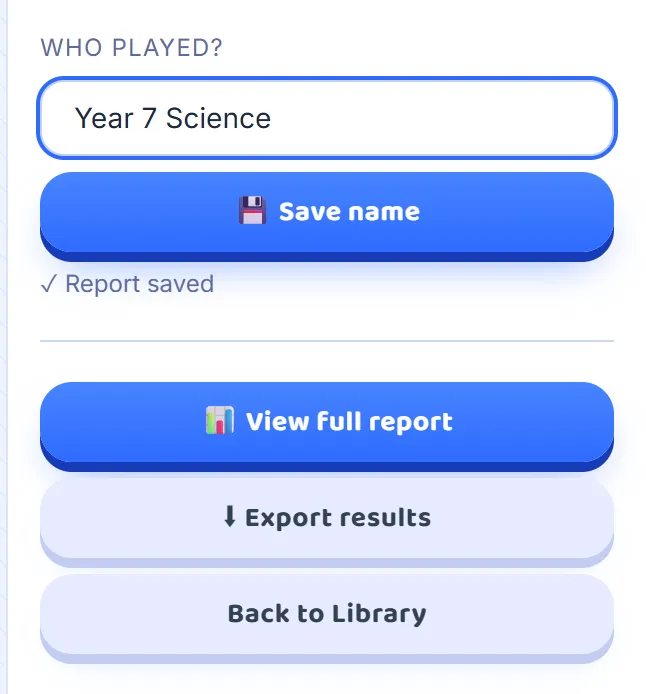
Polls in Giga Quizzes carry no points and have no right answer, so a set of them is simply a quiz that never keeps score. When the game ends, type a name under Who played? on the podium screen, such as “9C, first week”, and save it; the report stays under Reports for the rest of the year.
Run the subject-feelings poll again at the end of the year and put the two charts side by side. A class that moved from “not my favourite” towards “it is fine” and “love it” is one of the best measures of a good year, and showing the class the change is a lovely last lesson. The guide to every question type shows how to set up both kinds of poll.
Sources
- Pashler, H., McDaniel, M., Rohrer, D. & Bjork, R. (2008). Learning styles: Concepts and evidence. Psychological Science in the Public Interest, 9(3), 105–119.
Try it in Giga Quizzes
Free, in the browser, and nothing for your students to install. These guides show each step on the real screens.
New to Giga Quizzes?
Free live quizzes in the browser. Students join from any phone, with no app.
Make your first quiz →