Before Winter Break: A Review That Feels Like a Game
The last lesson before a holiday is hard to teach, and the best time to review. Why a quiz beats rereading, a 45-minute plan, and how to start January from the results.
 By the Giga Quizzes team4 min read

In this post
Everyone knows the last lesson before winter break. The room is restless, half the class is already on holiday in their heads, and anything that looks like a normal lesson meets a wall of sighs. It is also, as it happens, one of the best moments in the year to review. A game that brings back the whole term, played with a bit of festive fun, gets one more round of real thinking out of the class and gives you a head start for January.
Why review right before a break
Two weeks away from school is long enough for a lot to fade. The question is what to do in the last lesson so that less of it does. The answer from memory research is clear: have students recall what they learned, rather than read it again.
In a classic study, Henry Roediger and Jeffrey Karpicke had students read short passages and then either read them again or write down what they remembered. Five minutes later, the rereaders did slightly better. A week later, the students who had practised recalling remembered clearly more. A review quiz is that kind of recall practice, and it happens to be far more fun than rereading notes.
Build the review in an evening
- List the term week by week. Most terms have ten to fourteen weeks; write a line for each topic you covered.
- Pick one or two questions per topic. Choose the ideas you need students to carry into the new term, not the details. Fifteen to twenty questions in all is plenty.
- Favour the ones they found hard. If you have results from earlier quizzes, the questions near the bottom are the most worth repeating.
- Mix the formats. Multiple choice, true or false, an ordering question, a picture or two. Variety keeps a long review lively.
- Add a title slide for each topic. “October: the water cycle” on the big screen reminds students where they were when they learned it.
You probably wrote many of these questions already. In the Giga Quizzes editor, + Add question and then From my bank brings up the questions from all your sets, so a term review can be put together from the quizzes you ran during the term instead of written from scratch.
A plan for the last lesson
| Minutes | What | Why |
|---|---|---|
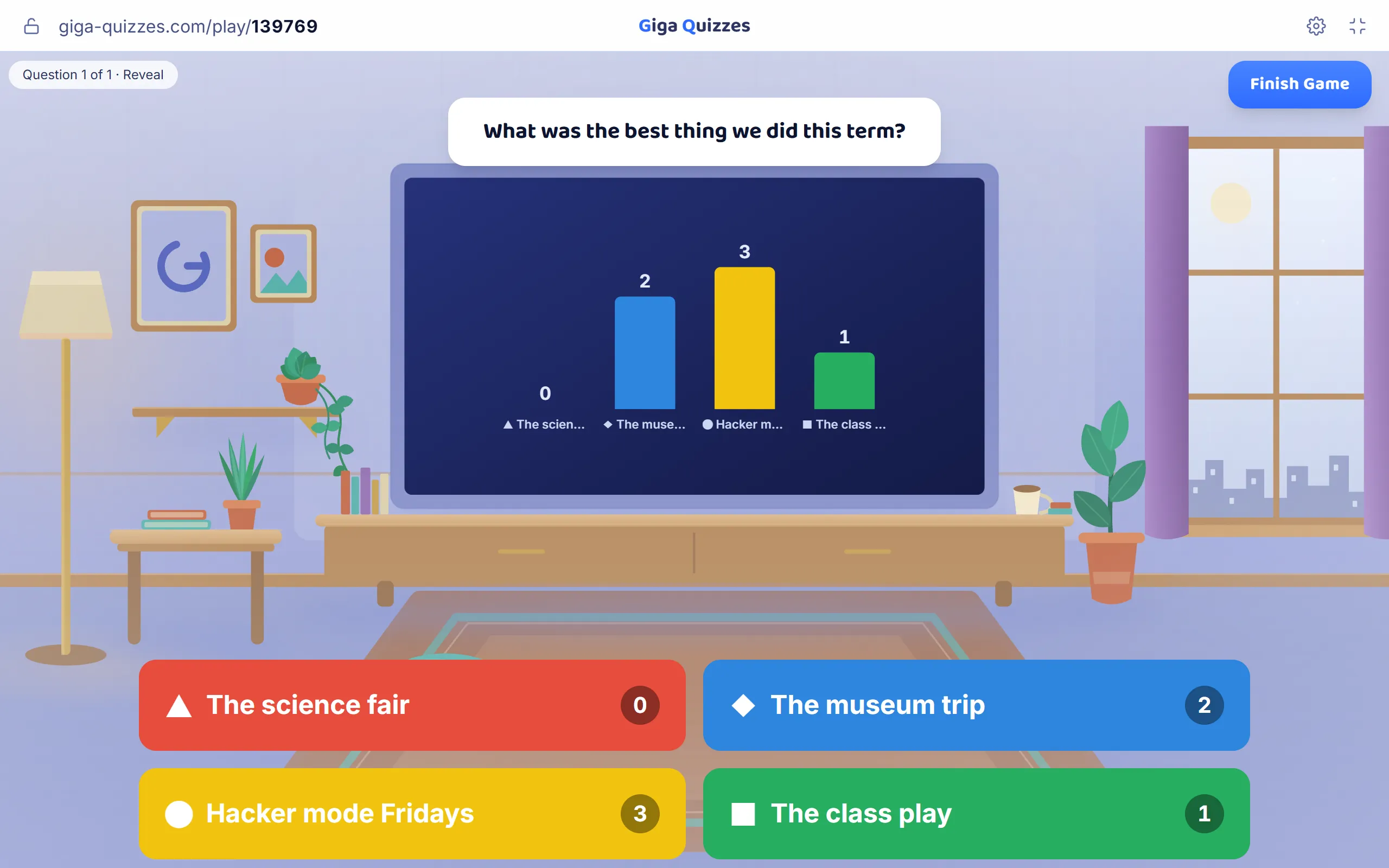
| 0–5 | A poll: “What was the best thing we did this term?” | Starts on a warm note, and nobody can get it wrong |
| 5–30 | The term review, in teams or as a race | The recall practice that makes January easier |
| 30–40 | A fun round: pictures, or questions about anything | A break that keeps everyone playing |
| 40–45 | Crown the champions of the term | A finish everyone remembers |
Teams, or a race against the clock
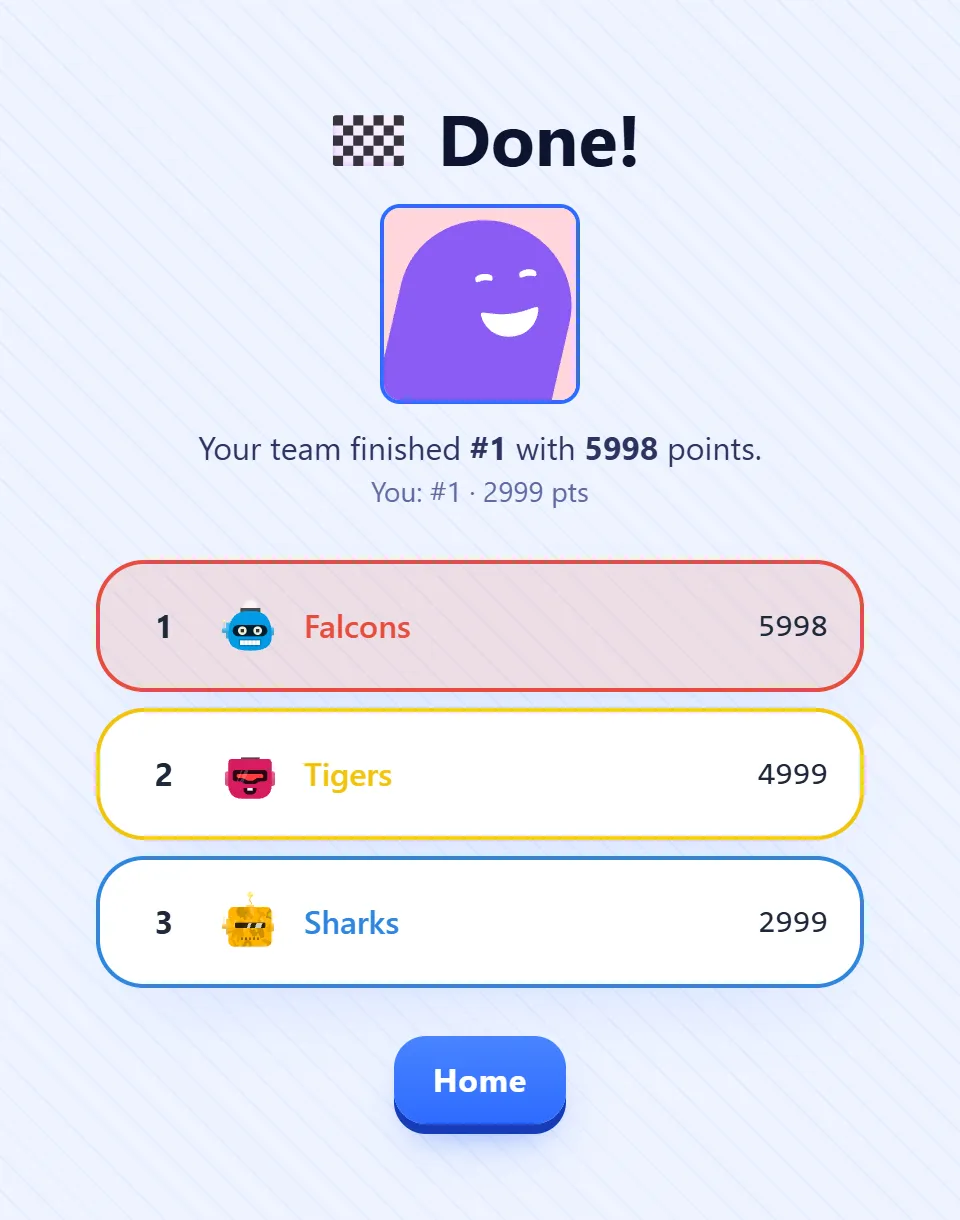
Teams suit the end of term. They mix up the room, everyone contributes, and the result is a shared celebration rather than one winner and twenty-nine runners-up. Switch on Teams in the game settings, choose two to six, and let the teams pick festive names in the lobby. Every right answer adds to the team’s score, and the game ends on a team podium.
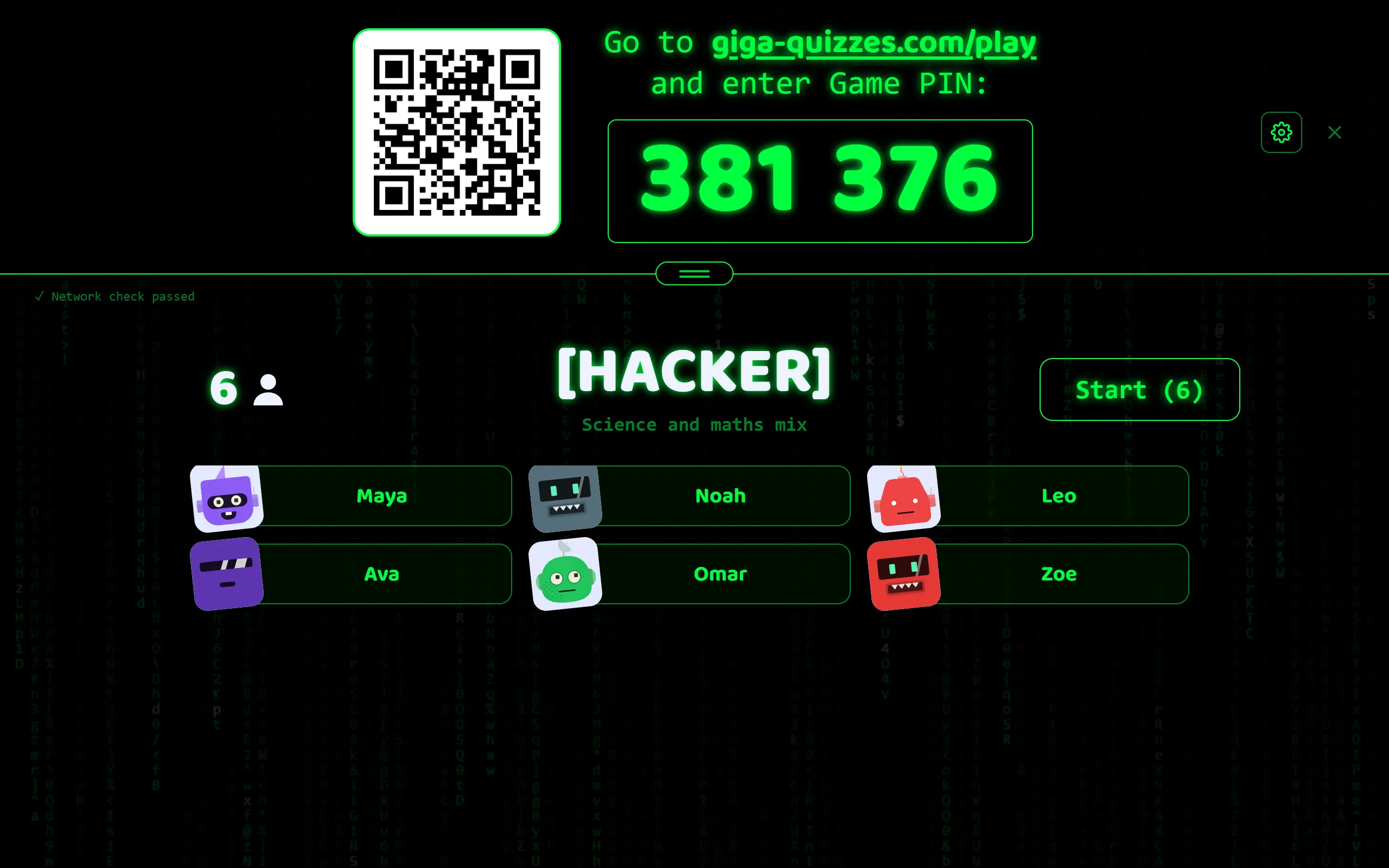
For a class that loves a race, play the same set in Hacker mode instead. Every student answers at their own pace, every right answer opens a vault that pays, multiplies or lets them hack a classmate, and when the questions run out they come round again. Set the clock to twenty minutes and the room will not stop working until it runs out.
Fun rounds that still count
- A picture round. A photo that uncovers itself tile by tile while the class races to recognise it.
- One word for the term. An open poll, shown as a word cloud on the big screen.
- Teacher trivia. Three questions about you. Students always remember these.
- The last question is about anything at all, so the game ends on a laugh.
If you would rather not build the fun round yourself, a short ready-made quiz from Discover does the job and needs no preparation at all.
Crown the champions of the term
If your class has a group, every group game you hosted this term has been adding up on its Points leaderboard. The last day before the break is the moment to announce the winner. A certificate, a small prize, or the right to choose the topic of January’s first quiz all work well. Name the leader of the Accuracy leaderboard too, so the careful students who are not always the fastest get their moment.
Start January with the results
The review is also a check of what the class remembers. When the game ends, the exported question breakdown lists the questions from the best answered to the worst. The topics at the bottom are where to begin in the new term. Two minutes with the report before you leave gives you the first lesson of January ready-made: the same three questions, asked again, to see what the holiday took away.
Sources
- Roediger, H. L. & Karpicke, J. D. (2006). Test-enhanced learning: Taking memory tests improves long-term retention. Psychological Science, 17(3), 249–255.
Try it in Giga Quizzes
Free, in the browser, and nothing for your students to install. These guides show each step on the real screens.
New to Giga Quizzes?
Free live quizzes in the browser. Students join from any phone, with no app.
Make your first quiz →