The First Week: Quiz Icebreakers for a New Class
A first-week quiz breaks the ice, teaches the routine you will use all year and tells you about the class. A lesson plan, true-or-false questions about you, polls and team games.
 By the Giga Quizzes team5 min read

In this post
In the first week with a new class, everyone is reading everyone. Students are working out what kind of teacher you are and what kind of year this will be; you are trying to put names to faces and find out who is who. A light, funny quiz does several jobs in that week at once. It gets the room laughing, gives every student a way to speak without speaking up, shows you a little about the class, and teaches the routine you will rely on for the rest of the year.
A plan for the first lesson
Twenty minutes is enough. The rest of the lesson can go to the things that cannot wait, such as seating, books and expectations.
| Minutes | Activity | What it does |
|---|---|---|
| 0–5 | Everyone joins the game on their phone | Teaches the routine while nothing is at stake |
| 5–10 | Five true-or-false statements about you | Gets the first laugh, and some real stories |
| 10–15 | Four quick polls about the class | Every student has a say in the first quarter of an hour |
| 15–20 | A short team round on anything at all | Mixes up the friendship groups |
True or false: the teacher edition
Students are curious about a new teacher, and a quiz about you is the easiest icebreaker there is. Write five or six statements, some surprising and true, some believable and false. Every reveal becomes a small story, and the class learns more about you in five minutes than in a term of corridor small talk.
Statements to adapt (change them so they are true or false for you)
- I once lived in another country.
- I have never seen snow.
- My first job was in a bakery.
- I can play a musical instrument.
- I was terrible at this subject when I was your age.
- I have met someone famous.
The last two are worth including if they are true. Hearing that a teacher once struggled with the subject is reassuring to the students who are already nervous about it, and the famous-person story will be asked about all year.
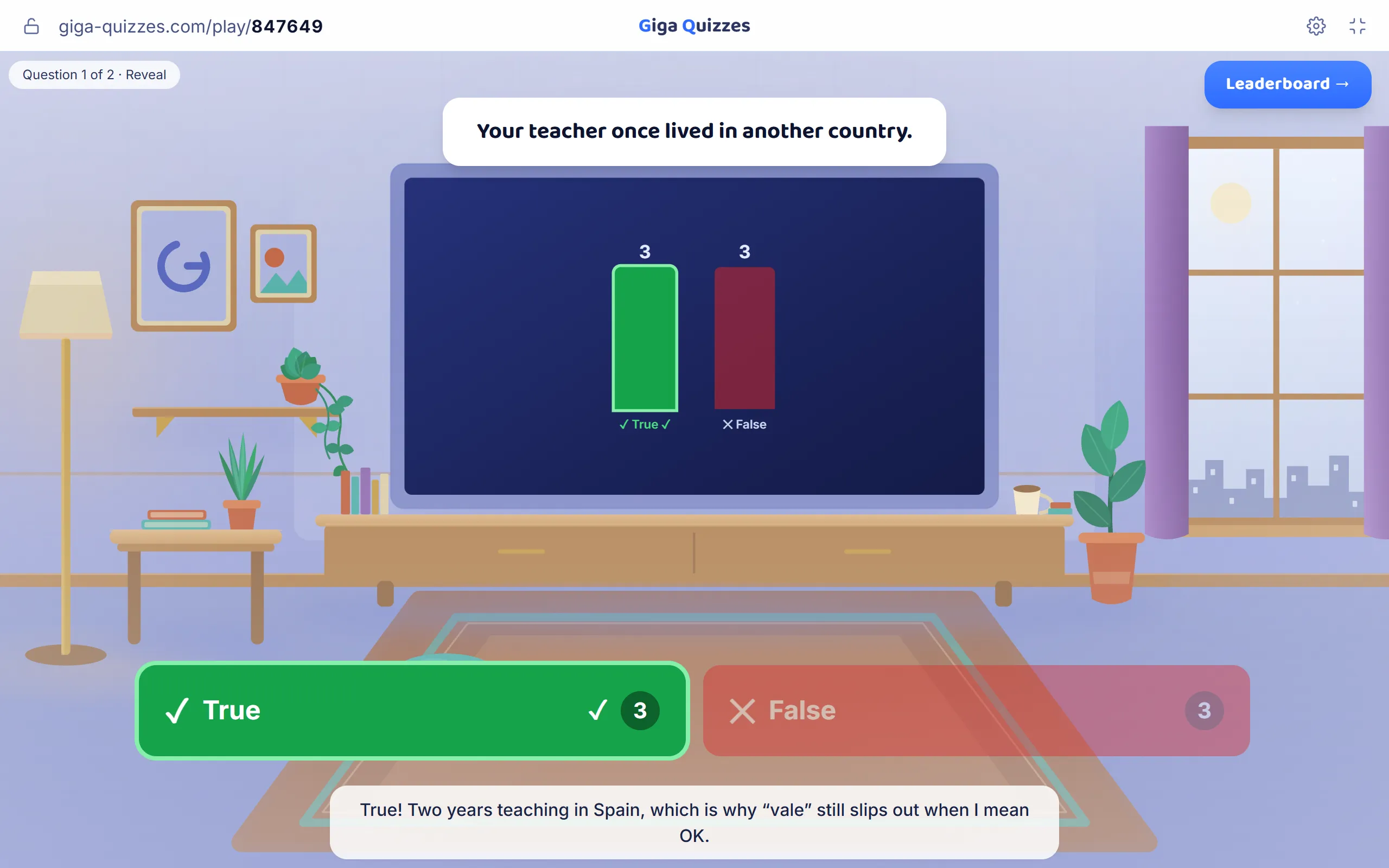
Give these questions no points. The aim is to get to know you, not to rank the class on day one, and nobody minds being wrong about their teacher’s past.
Polls that let everyone speak
A poll has no right answer, so nobody can fail it. In the first week, that makes it the gentlest way to hear from the whole room, including the students who will not say a word aloud for another month.
- Morning person or night owl?
- If you could have one superpower, which would it be?
- Which subject did you enjoy most last year?
- Describe your summer in one word.
- How do you feel about this subject so far? Excited, fine, nervous, ask me in June.
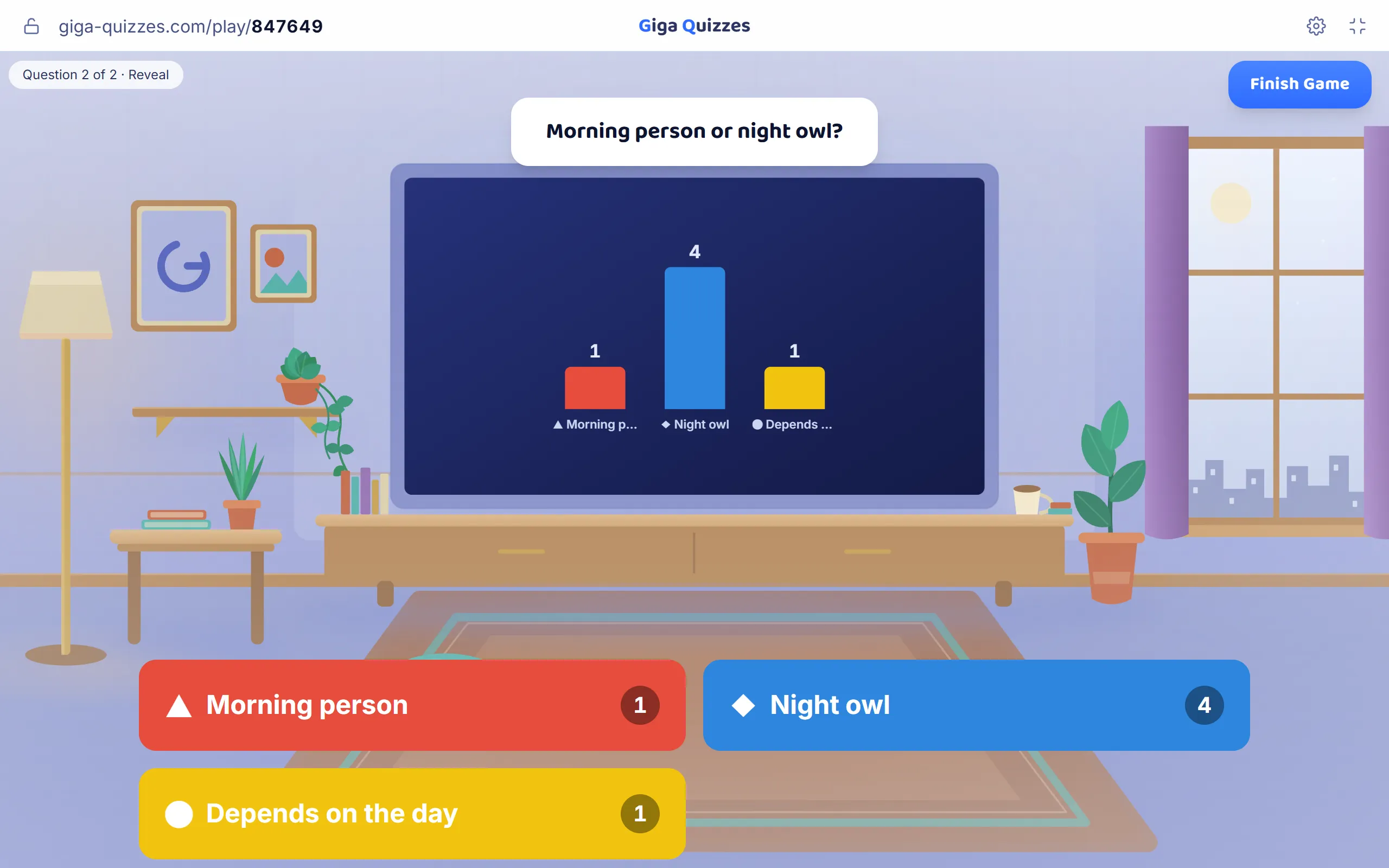
Say something about every result. “Most of you are night owls, so nothing too hard first thing on a Monday” gets a laugh and tells the class that its answers are being heard. That message, more than any single poll, is what you are really teaching in the first week.
A team round to mix the room
Left alone, students sit with the friends they arrived with. A team game is a natural reason to break that up for ten minutes. Let the game share students out evenly as they join rather than letting them pick, and friends usually end up on different sides.
Choosing a team name is a small icebreaker of its own. Give each team sixty seconds to agree on one, and suddenly students are talking to people they have not met. Keep the questions themselves light: flags, animals, famous places, or a picture round. Nothing that needs last year’s knowledge.
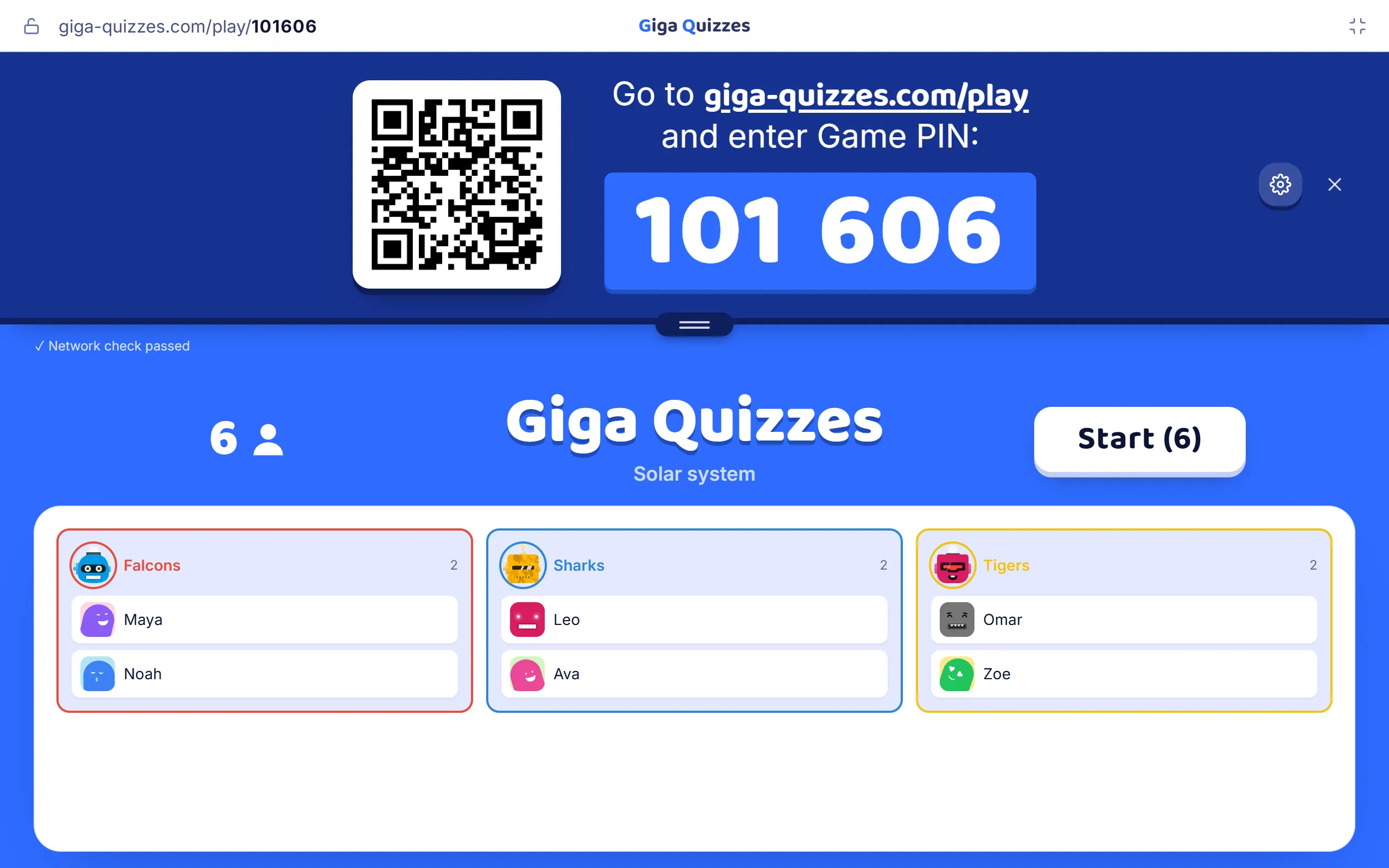
In Giga Quizzes, switch on Teams in Game settings, pick between two and six, and leave Let players pick their own team off. In the lobby, click a team’s name to type the one the team chose, and drag a student into another column if the numbers come out uneven. The guide to playing in teams shows every screen.
Teach the routine while nothing is at stake
The first game is also a rehearsal. Students learn how to get in, how to pick a sensible nickname, and how the screens move from question to answer to leaderboard. Learning that now, with a quiz about your pets, saves five confused minutes later in the year when the quiz is about something that matters.
Three ground rules worth setting in the first game
- Your nickname is your real first name, or something your teacher can recognise. A filter catches anything rude, but the rule saves time.
- Phones go face down when the game ends. Say it once now and it becomes a habit.
- There are no wrong answers in a poll, and nobody will be asked what they chose.
Students go to giga-quizzes.com/play and enter the room code, or point a camera at the QR code on the board; there is no app and no account. With a class you do not know yet, keep Filter nicknames on in Game settings: a rude nickname is swapped for a neutral one before it reaches the projector.
What not to ask
A first-week quiz should be comfortable for every student in the room, and you do not yet know their circumstances. Leave out anything about family, money, religion, health or where students live. Questions like “What did you do on holiday?” can sting for a student who did nothing, so “Describe your summer in one word” is safer: “boring” is a perfectly good answer, and usually gets a laugh.
The same goes for the polls you show on the big screen. Ask about preferences and opinions, never about things a student might be embarrassed to admit, even anonymously.
Set up the class group the same week
If you plan to run quizzes all year, the first week is the moment to create a class group. Students join it once, with a six-digit code on the board, and from then on every game you host for the group counts towards its leaderboards. You can also set quizzes as homework. Nobody needs an account to join.
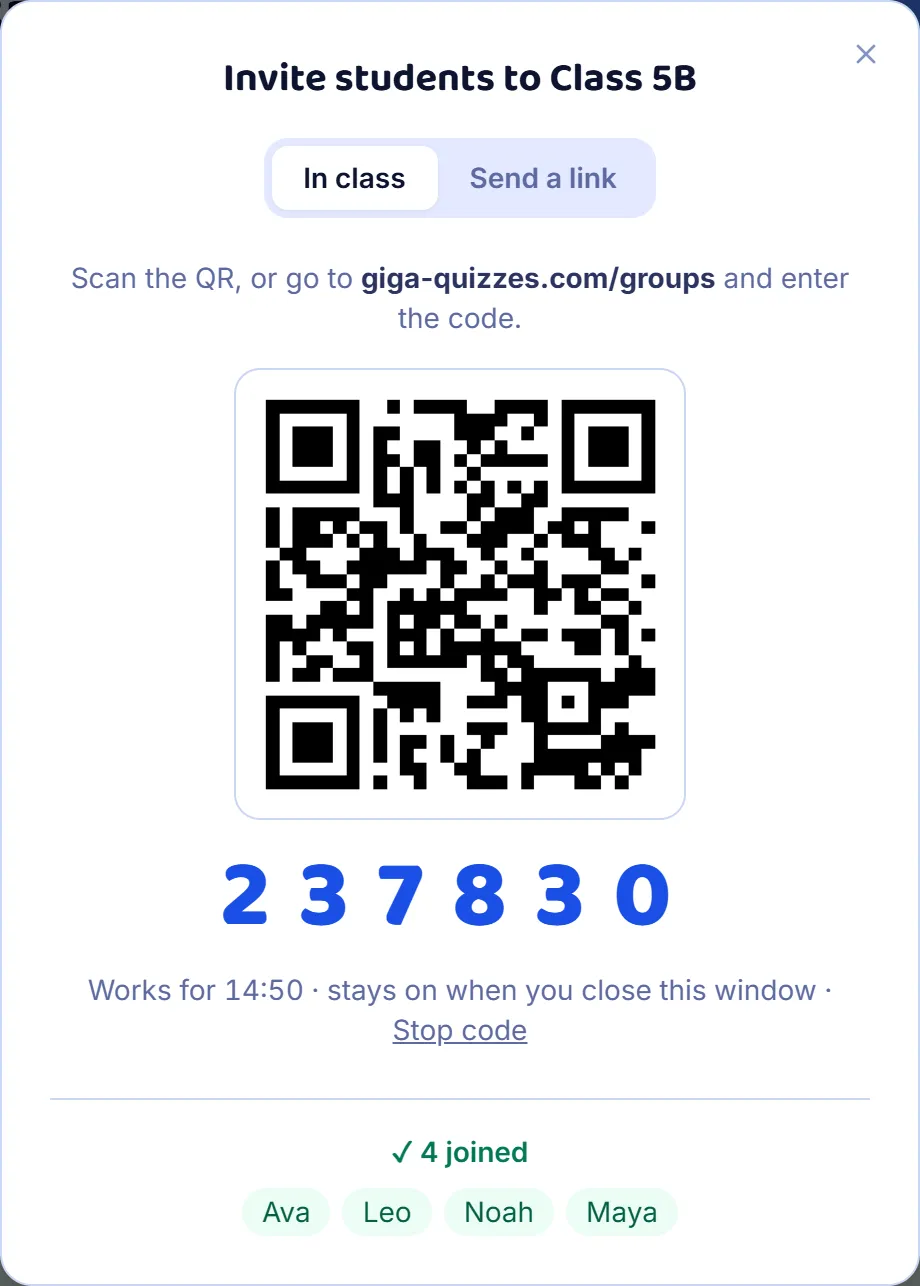
Doing it now, with the whole class in the room, means the leaderboards start from the very first real game, and you will not be chasing the three students who were absent in week four.
Try it in Giga Quizzes
Free, in the browser, and nothing for your students to install. These guides show each step on the real screens.
New to Giga Quizzes?
Free live quizzes in the browser. Students join from any phone, with no app.
Make your first quiz →