Holidays Around the World: A Quiz Lesson
A festive lesson that teaches: eight celebrations from around the world, what to ask about each, how to get the facts right, and how to let students share their own traditions.
 By the Giga Quizzes team4 min read
In this post
The weeks before a long holiday are hard to teach in. Attention drifts, and half the room is already somewhere else. A quiz lesson on how people celebrate around the world goes with that mood instead of against it. It is colourful, it is fun to play, and it teaches something real about other cultures, very often including the cultures of students sitting in your own classroom. This post gives you a balanced set of celebrations, the questions worth asking, and a plan for the lesson.
Eight celebrations, and what to ask about each
Choose six to eight celebrations from different parts of the world and different traditions. Variety is the point: a mix of religious and cultural festivals, spring and winter, lights and water and food.
| Celebration | Where and when | Good things to ask about |
|---|---|---|
| Diwali | India and worldwide; October or November | The clay lamps (diyas), rangoli patterns, why it is the festival of lights |
| Lunar New Year | China, Vietnam, Korea and beyond; January or February | Red envelopes, the twelve animals of the zodiac, the lantern festival that ends it |
| Hanukkah | Jewish communities worldwide; November or December | Eight nights, the menorah, foods fried in oil such as latkes |
| Eid al-Fitr | Muslim communities worldwide; date moves each year | The end of the Ramadan fast, morning prayers, sweets and new clothes |
| Christmas | Worldwide; 25 December, or 7 January in many Orthodox churches | How customs differ from country to country |
| Day of the Dead | Mexico; 1 and 2 November | Marigolds, the ofrenda (altar) and why it is a happy celebration |
| Holi | India and Nepal; spring | The coloured powders and the arrival of spring |
| Songkran | Thailand; mid-April | The Thai New Year and its famous water fights |
Ask about customs, not dates
Many of these celebrations follow lunar or religious calendars, so their dates move from year to year. A question like “What date is Diwali?” will be wrong next year. Questions about customs, symbols, food and meaning stay true, so the quiz works every time you use it.
Facts about other people’s traditions deserve extra care. Check each one against a reliable source, such as an encyclopedia or a community’s own organisation, rather than a random website, and avoid wording that turns a living tradition into a curiosity. “Families draw rangoli patterns at the entrance to welcome guests” describes; “strange coloured drawings” judges.
Questions that work well
- Which festival is famous for its water fights? (Songkran.)
- How many nights does Hanukkah last? (Eight.)
- What does Eid al-Fitr mark the end of? (Ramadan, the month of fasting.)
- Which flower is placed on altars for the Day of the Dead? (The marigold.)
- What do children often receive in red envelopes at Lunar New Year? (Money, for good luck.)
Pictures and maps
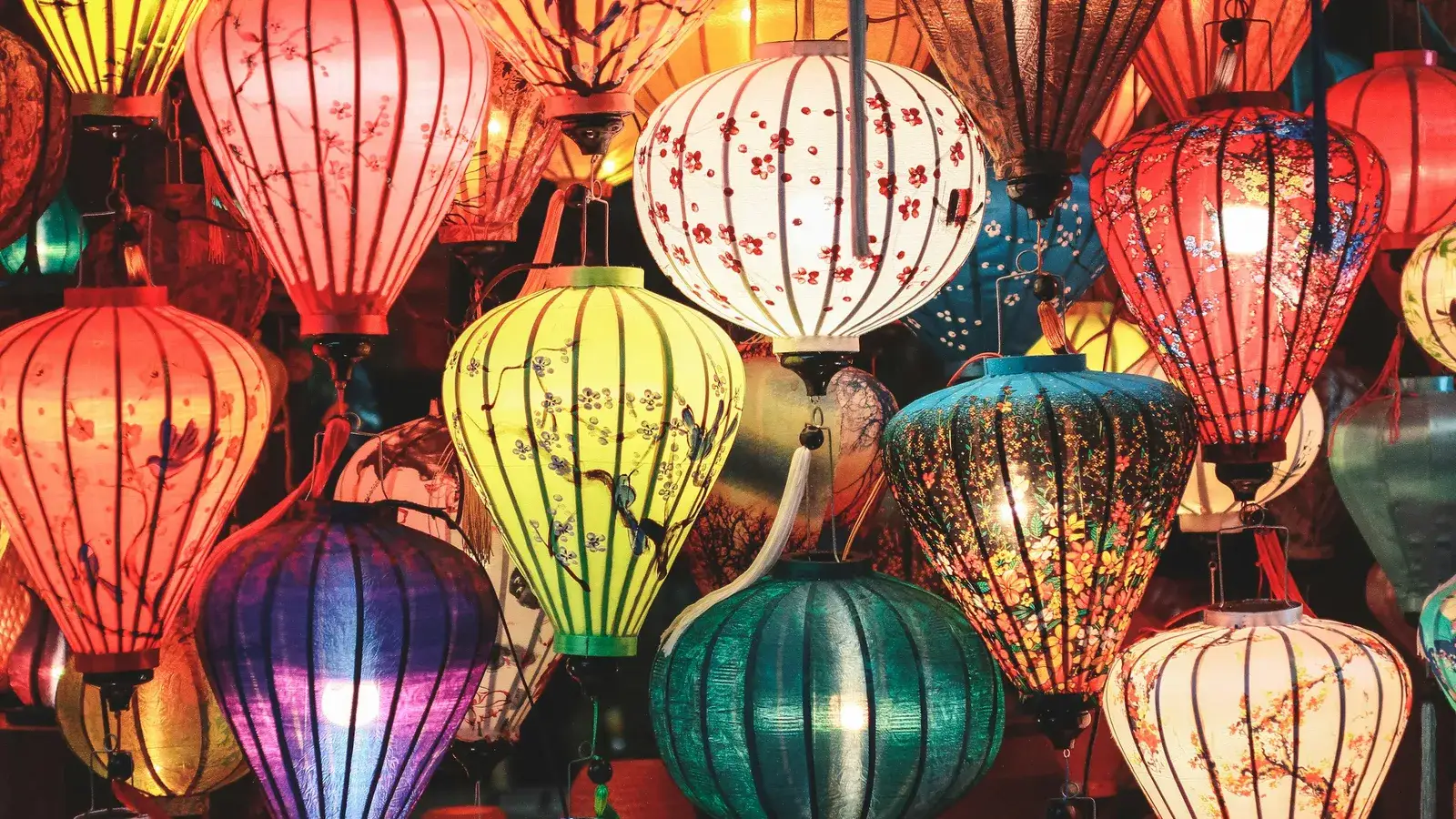
Celebrations are visual, and pictures carry this quiz. Show a photo of lanterns, lamps or coloured powder and ask which festival it is, or show four pictures as the answers and ask which belongs to Holi. Many festival photos are under free licences; check the licence and credit the photographer.
A map question adds geography: show the world map and ask students to tap where a celebration comes from, such as Songkran in Thailand or the Day of the Dead in Mexico. Mark the area generously, so a student who knows the region is not marked wrong for tapping just outside the border.
One slide, then two questions
A quiz about celebrations is better when it explains them first. A good rhythm is one short slide for each celebration, with a picture and two or three lines on what is celebrated and why, followed by two questions: one about a custom, and one about its meaning. In Giga Quizzes that is an Information slide: the picture and the lines fill the board, and the phones simply ask everyone to look at it.
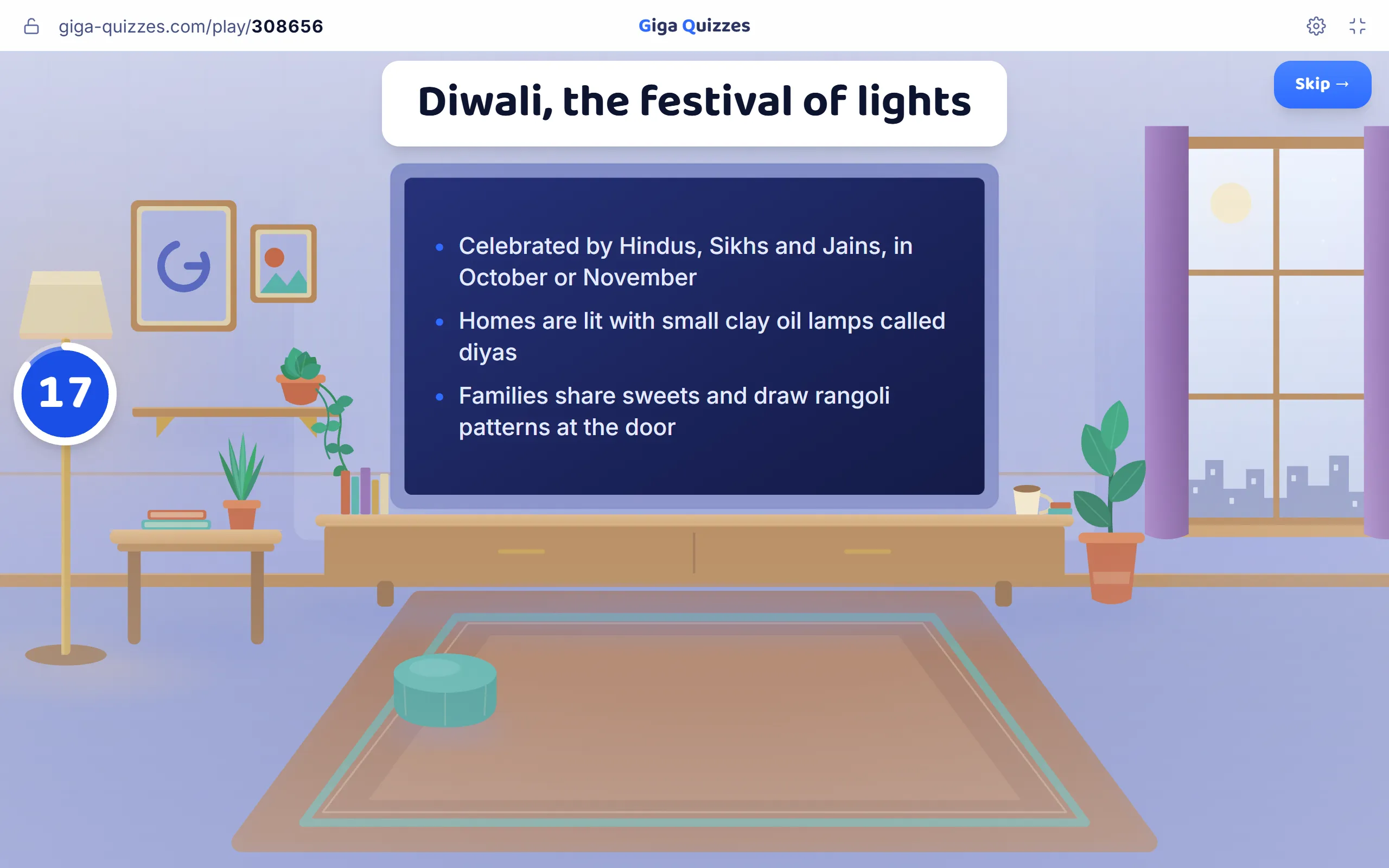
With six to eight celebrations, that comes to twelve to sixteen questions, which fits comfortably in a lesson with time left to talk.
Let students bring their own
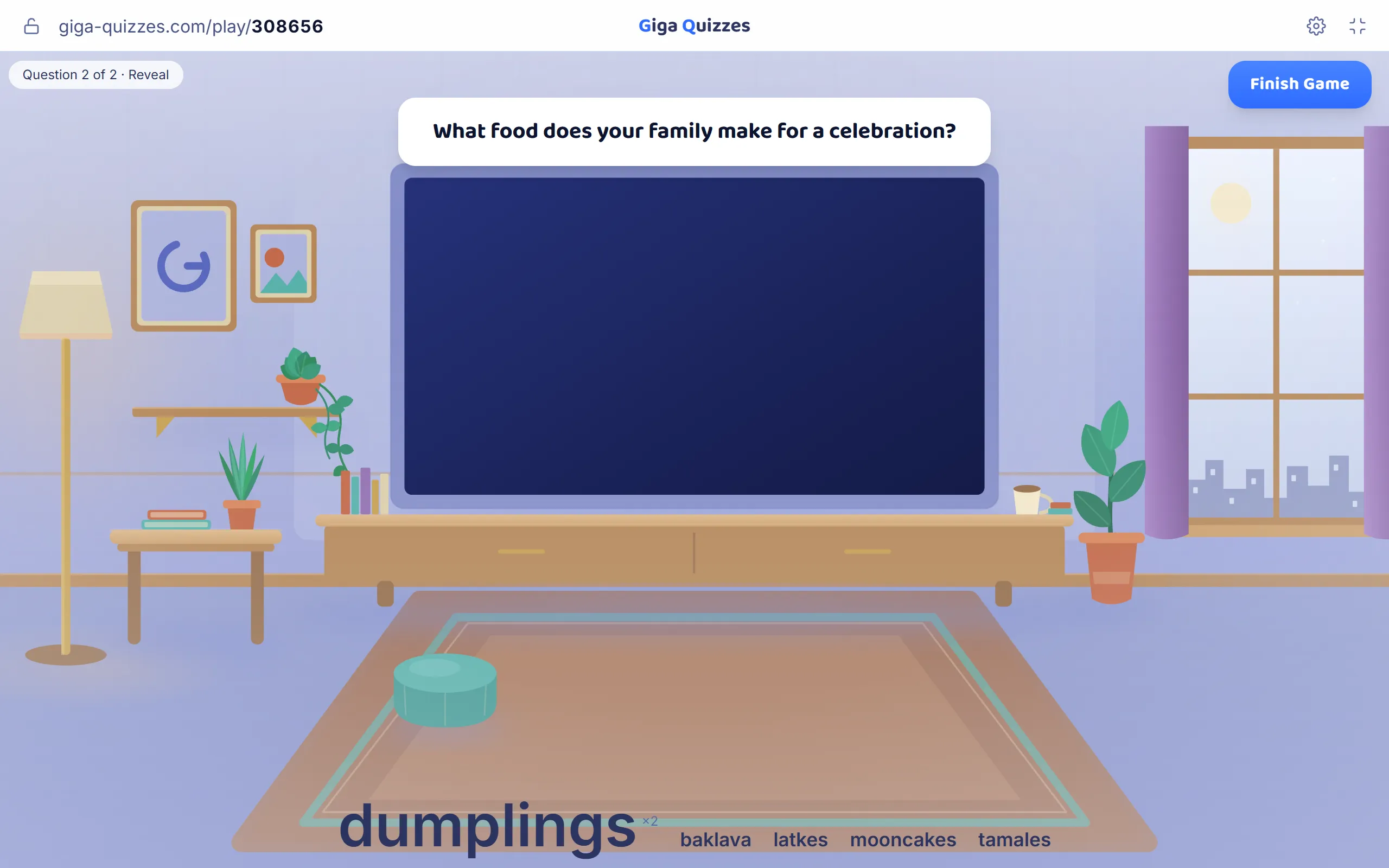
Your class almost certainly celebrates more holidays than any quiz could cover. End with an open question that has no right answer, such as “What food does your family make for a celebration?”, and show the answers as a word cloud. Then invite a few students who want to, and only those, to describe a tradition from home.
Be thoughtful here. Some students love to share; others would rather not, and nobody should feel singled out about their family’s religion or traditions, or about not celebrating at all. Asking about food, music or games, rather than beliefs, keeps the door open for everyone.
A forty-minute plan
- Warm-up (5 minutes): a picture round. Which festival is this?
- Around the world (25 minutes): a slide and two questions for each celebration, in teams if the class enjoys it.
- Your traditions (10 minutes): the word cloud, and a few students’ stories.
Played in teams, the game ends on a team podium, a cheerful way to close the last lesson before a break.
Try it in Giga Quizzes
Free, in the browser, and nothing for your students to install. These guides show each step on the real screens.
New to Giga Quizzes?
Free live quizzes in the browser. Students join from any phone, with no app.
Make your first quiz →