New Year Reflection with Polls and a Quiz
Start the new year by looking back and looking ahead: polls on last term, two word clouds, goals written as if-then plans, and a just-for-fun quiz about the class itself.
 By the Giga Quizzes team4 min read

In this post
The first lesson after the new year is a fresh start for everyone. Students come back rested, a little rusty, and more reflective than they would admit. It is the right moment to look back at what the class learned and ahead to what comes next. A few polls, a goal-setting exercise that actually works, and a light quiz about the class itself turn that reflection into something the whole room does together, instead of a worksheet everyone fills in alone and nobody reads.
The plan
| Minutes | Activity |
|---|---|
| 0–5 | Three polls looking back at last term |
| 5–10 | Two word clouds: last year, and this year |
| 10–15 | A goals poll, then a private if-then plan on paper |
| 15–20 | A quiz about the class’s own year so far |
Look back: what did we learn?
Start with a few polls about the term that just ended. A poll has no right answer and no points, so students can be honest about what stuck and what did not.
- “Which topic from last term do you feel most confident about?” with the topics as answers.
- “Which topic would you most like to go over again?” The same list.
- “How do you feel about this subject now, compared with September?” Much better, a bit better, the same, a bit worse.
The second poll is as useful to you as to them. In this class, half the room wanted ratio again, which settles what the first review lesson of January should be about.
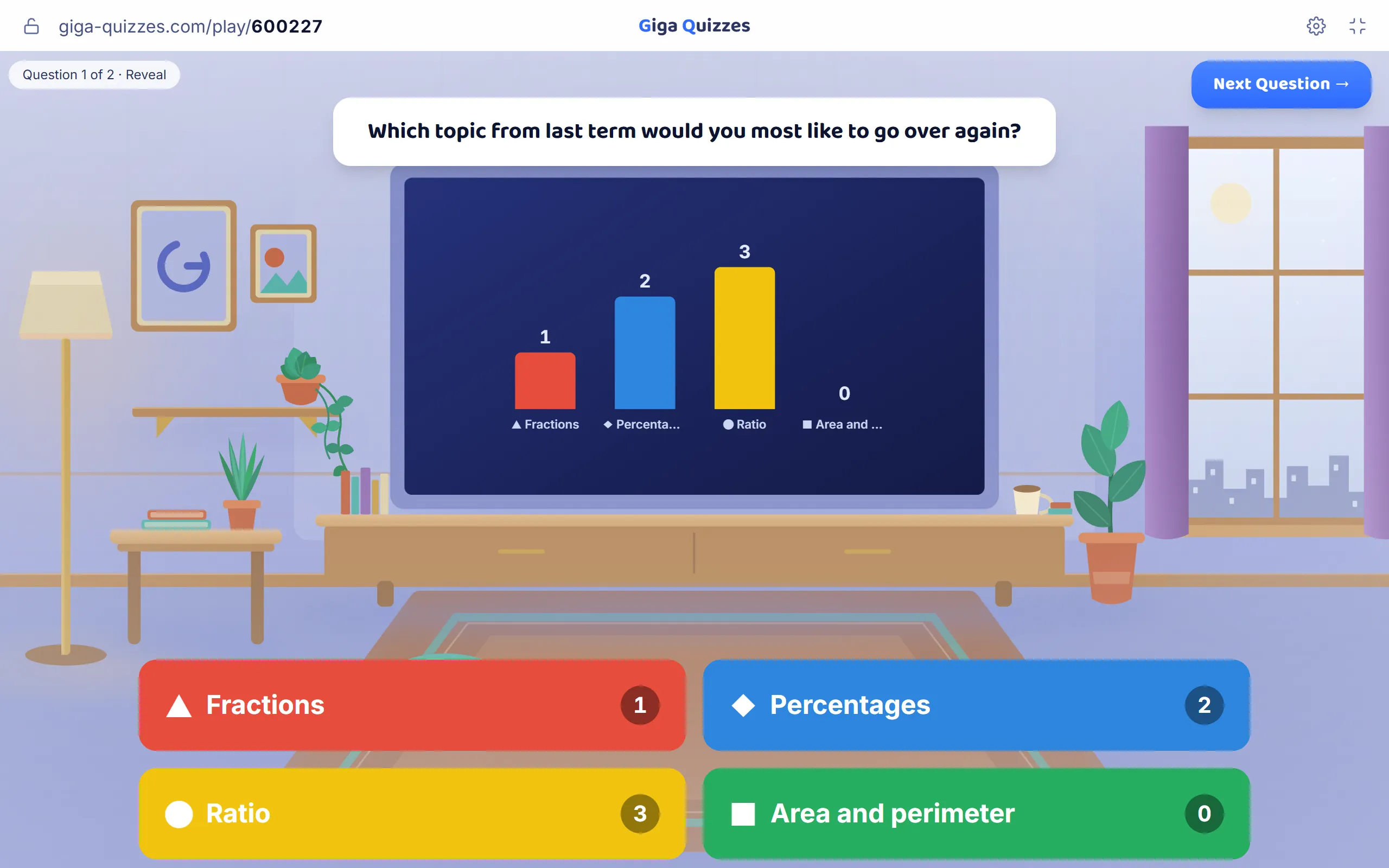
Students also see that they are not the only one who found something hard, which makes asking for help a little easier for the rest of the year.
Two word clouds
Switch a poll to typed answers and the board shows a word cloud, with the most common words largest. Two of them make a lovely pair:
- “Describe last year in one word.”
- “Choose one word for what you want this year to be.”
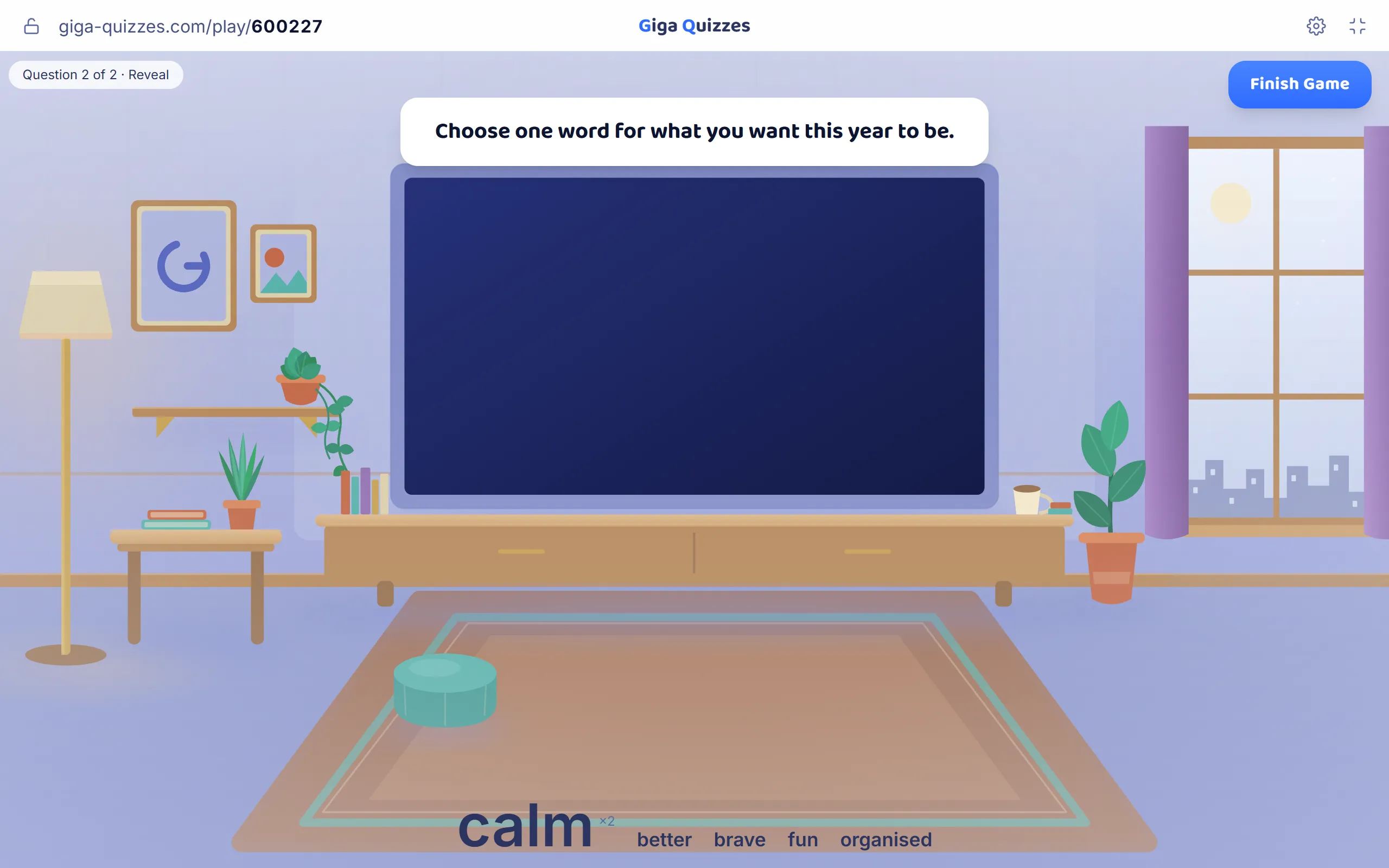
Show them one after the other and talk about the difference. When the first cloud says “stressful” and the second says “calm”, the class has just told you what it needs, and every student had a say in it.
Goals that get kept
Ask the class what they most want to get better at this term, with a handful of answers such as speaking up more, handing homework in on time, understanding the hard topics and doing better in tests. The results show what most of the class is aiming for, which makes the goal feel shared rather than imposed.
Then turn the goal into a plan. Most new-year resolutions fail because they stay vague. Psychologists Peter Gollwitzer and Paschal Sheeran pulled together nearly a hundred studies of “implementation intentions”, plans written in the form “when this happens, I will do that”, and found they made people noticeably more likely to reach their goals than goals alone.
From goal to if-then plan
- Goal: hand homework in on time. Plan: “When I get home on a Monday, I will do the homework before anything else.”
- Goal: speak up more. Plan: “When I know an answer in class, I will put my hand up at least once a lesson.”
- Goal: understand the hard topics. Plan: “When I get a quiz question wrong, I will read the explanation and ask about it the next day.”
Students write their own plan on paper and keep it. The poll starts the conversation; the private plan is the one they own.
A quiz about the class
End with something fun: a quiz about the class’s own year so far. Questions only this group can answer make everyone laugh and remember.
Questions to adapt
- Where did we go on our class trip?
- What fell over during the experiment in October?
- How many days did it snow before the break?
- Which song got stuck in everyone’s head during project week?
- Who won the Friday quiz the most times last term?
Add photos from the year if you have them, with permission, and without showing any student who would rather not be shown. Set every question to no points: the aim is remembering together, not winning. With nothing at stake, nobody minds being wrong, and every reveal becomes a story.
Save it for June
Give the game a name when it ends, such as “8B, January”, so it is easy to find later. In June, run the confidence poll again and put the two charts side by side, and ask the class whether they kept their if-then plans. A class that moved from “a bit worse” towards “much better” has had a good year, and seeing it on the board is one of the most rewarding moments you can give them. Both kinds of poll are covered, with pictures, in the Giga Quizzes guide to every question type.
Sources
- Gollwitzer, P. M. & Sheeran, P. (2006). Implementation intentions and goal achievement: A meta-analysis of effects and processes. Advances in Experimental Social Psychology, 38, 69–119.
Try it in Giga Quizzes
Free, in the browser, and nothing for your students to install. These guides show each step on the real screens.
New to Giga Quizzes?
Free live quizzes in the browser. Students join from any phone, with no app.
Make your first quiz →